Your plant is drooping, and now you have to guess.
Did you water it too much, or not enough? It is a hard call, because the two problems can look almost the same. Virginia Cooperative Extension says an underwatered plant can look a lot like an overwatered one. Both can wilt, drop leaves, and stop growing.
There is a simple reason for this. When roots sit in soggy soil and start to rot, they cannot take up water. University of Connecticut Extension explains that rotting roots absorb less water, so the plant can look wilted and droopy even though the soil is wet. Adding more water at that point only makes it worse.
The good news is that you can tell the two apart in about 30 seconds without any special tools. This guide shows you the four quick checks I use, then how to fix each problem. If your main symptom is yellow leaves, our guide on why houseplant leaves turn yellow covers the other possible causes too.
The Short Answer
Do these four checks, in this order:
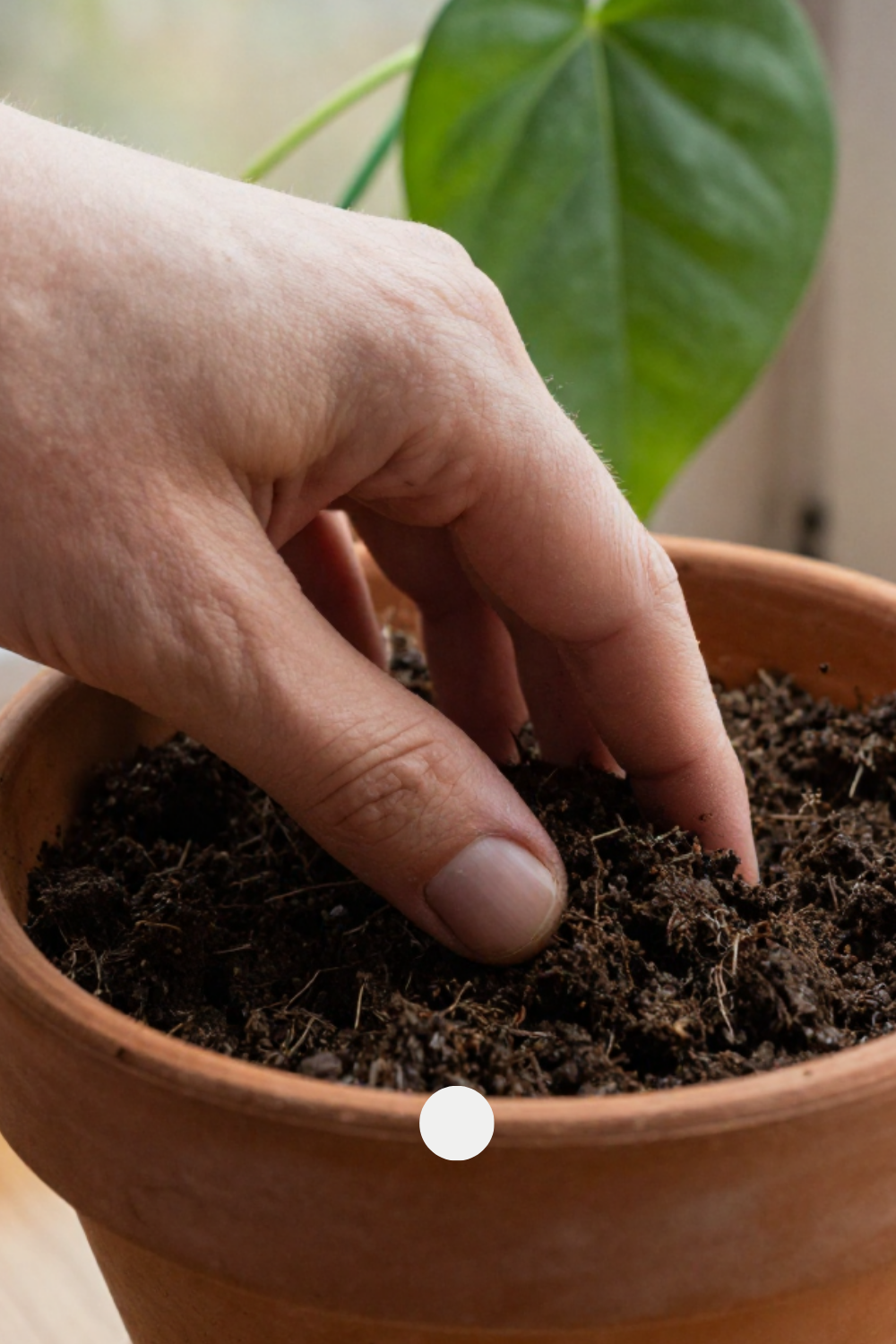
- Push a finger into the soil. Wet and cold usually means too much water. Dry all the way down usually means too little.
- Lift the pot. A heavy pot is holding water. A very light pot is dry.
- Look at the leaves. Soft, mushy, or yellow leaves point to too much water. Dry, crispy, or curling leaves point to too little.
- Check the drainage holes and the saucer. Blocked holes or standing water point to too much water.
Droopy plant plus wet soil: too much water. Droopy plant plus dry soil: too little. The soil answers the question more reliably than the leaves do, which is why I always check it first.
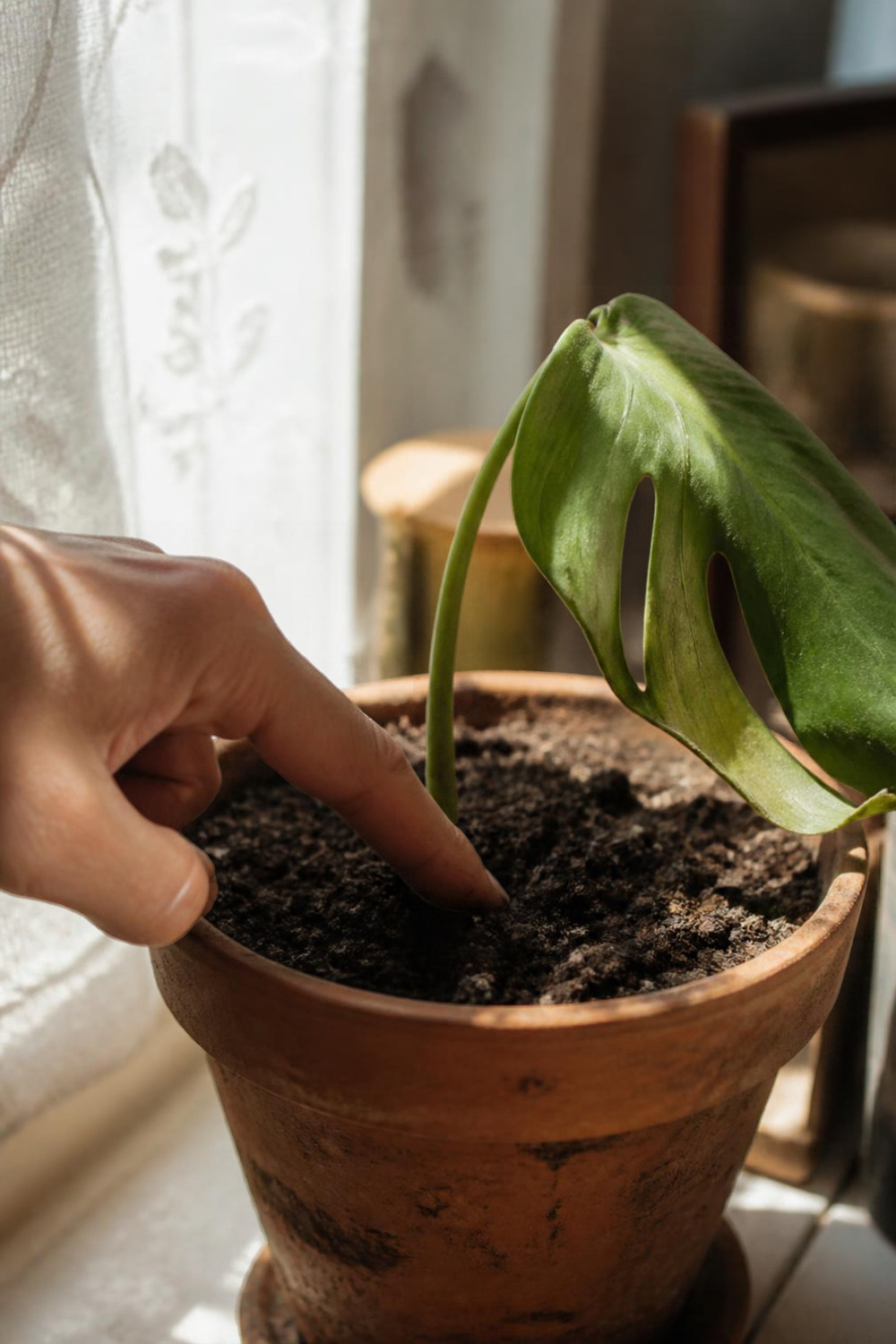
1. Check the Soil with Your Finger
This is the most useful check, and it takes five seconds.
Do not water on a calendar. Colorado State University Extension says there is no fixed schedule, because water needs depend on the plant, its surroundings, the potting mix, and the container. A finger in the soil tells you what is happening in your pot today.
How deep should you go? Extension sources give slightly different answers. University of Connecticut Extension says about an inch. University of Illinois Extension says about two inches. For a small pot, an inch is usually enough. For a tall or large pot, go deeper, because the bottom can stay wet long after the top dries out.
What You Are Feeling For
- Cold, wet, or muddy soil that sticks to your finger: the plant has plenty of water, and probably too much if it is drooping.
- Dry, loose soil that falls off your finger: the plant needs water.
- Barely moist: it depends on the plant. See the section on plant types below.
For a big floor pot, a wooden dowel works better than a finger. The University of Maryland suggests pushing a dowel to the bottom of the container. Moist soil will cling to it or darken it a little.
You can also use a moisture meter. Virginia Cooperative Extension lists a soil hygrometer or water meter next to the finger test as ways to monitor moisture. I still trust my finger first.
2. Lift the Pot
Weight tells you a lot, and most people never use it.
Colorado State University Extension says to check the weight of the container, along with the feel and color of the soil. The University of Maryland recommends lifting the pot now and then and comparing it with how heavy it felt right after watering.
Here is how I use it. Water the plant thoroughly one time and lift it once it has finished draining. Remember how heavy it feels. A day later, lift it again. After a few days you will know the difference between a pot that is full of water and a pot that is nearly dry. A pot that feels much lighter than that is ready for water.
3. Read the Leaves and Stems
Leaves are the last thing I check, because the same symptom can mean two things. Wilting, for example, can show up in both cases. University of Illinois Extension notes that wilting can mean the plant is thirsty, but it can also be a sign of overwatering, so check the soil before you react.
Virginia Cooperative Extension lists these signs of overwatering:
- Wilting
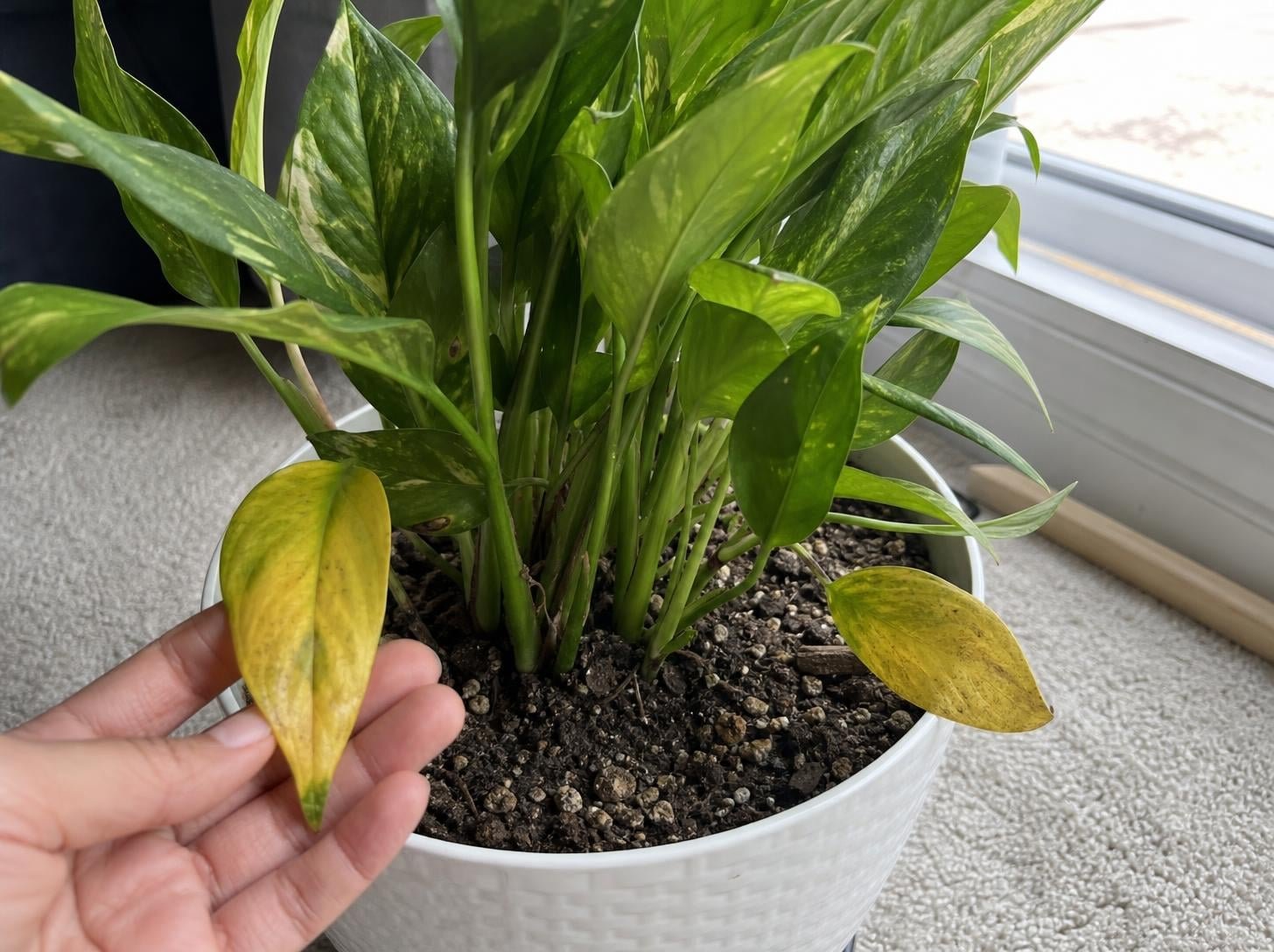
- Yellow leaves, both old and new
- Mushy leaves and stems
- Leaf drop
- Stunted growth
- Soil that smells rotten
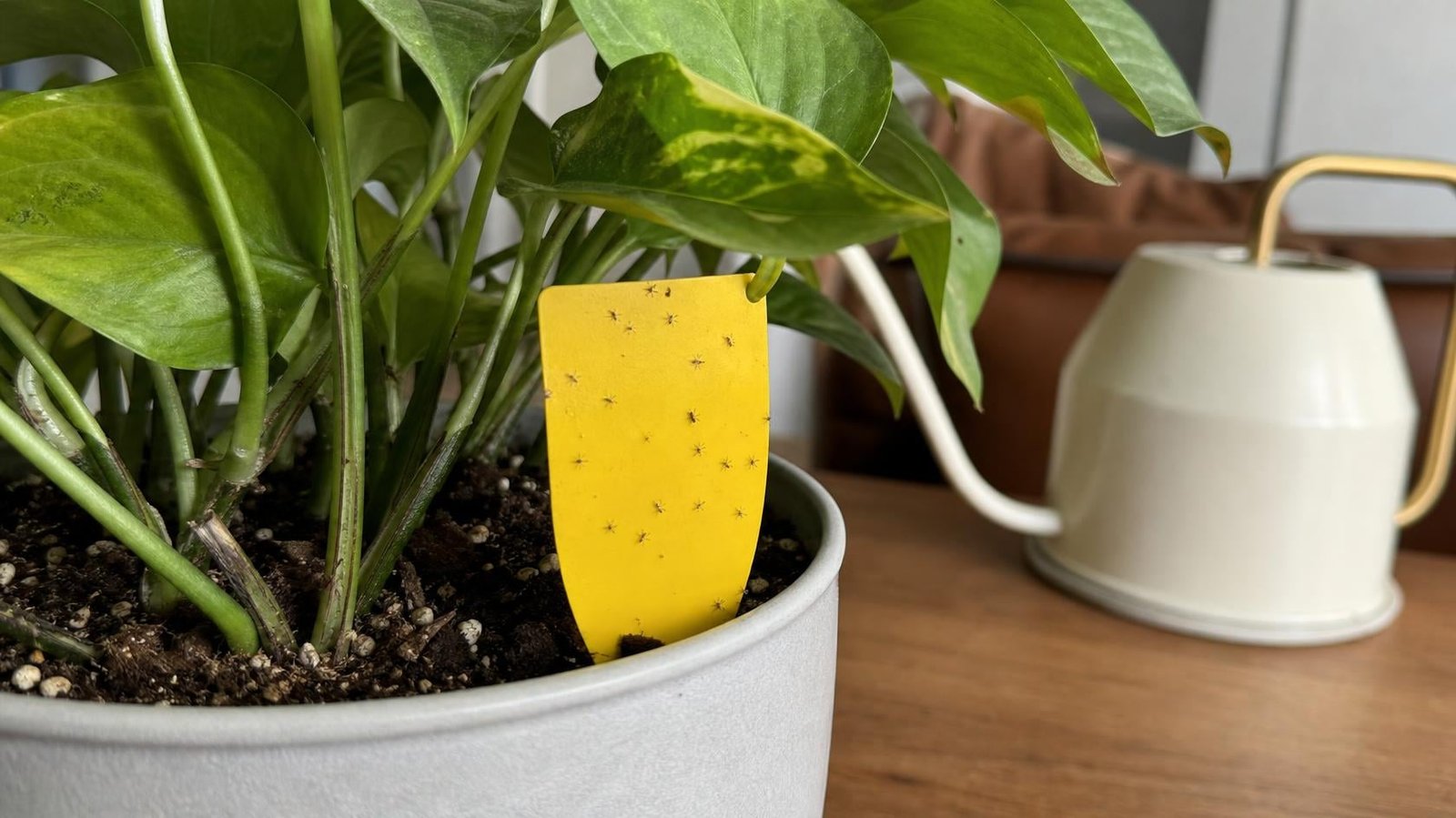
- Fungus gnats
And these signs of underwatering:
- Wilting
- Dry or brittle leaves
- Brown leaf tips or edges
- Curling leaves
- Leaf drop
- Stunted growth
- Soil pulling away from the edge of the pot
- A very light pot
Notice that wilting, leaf drop, and slow growth appear on both lists. That is why the soil check matters. Soft and mushy points to too much water. Dry and brittle points to too little.
4. Look at the Drainage
Sometimes the plant is not getting too much water from you. It is just not able to get rid of it.
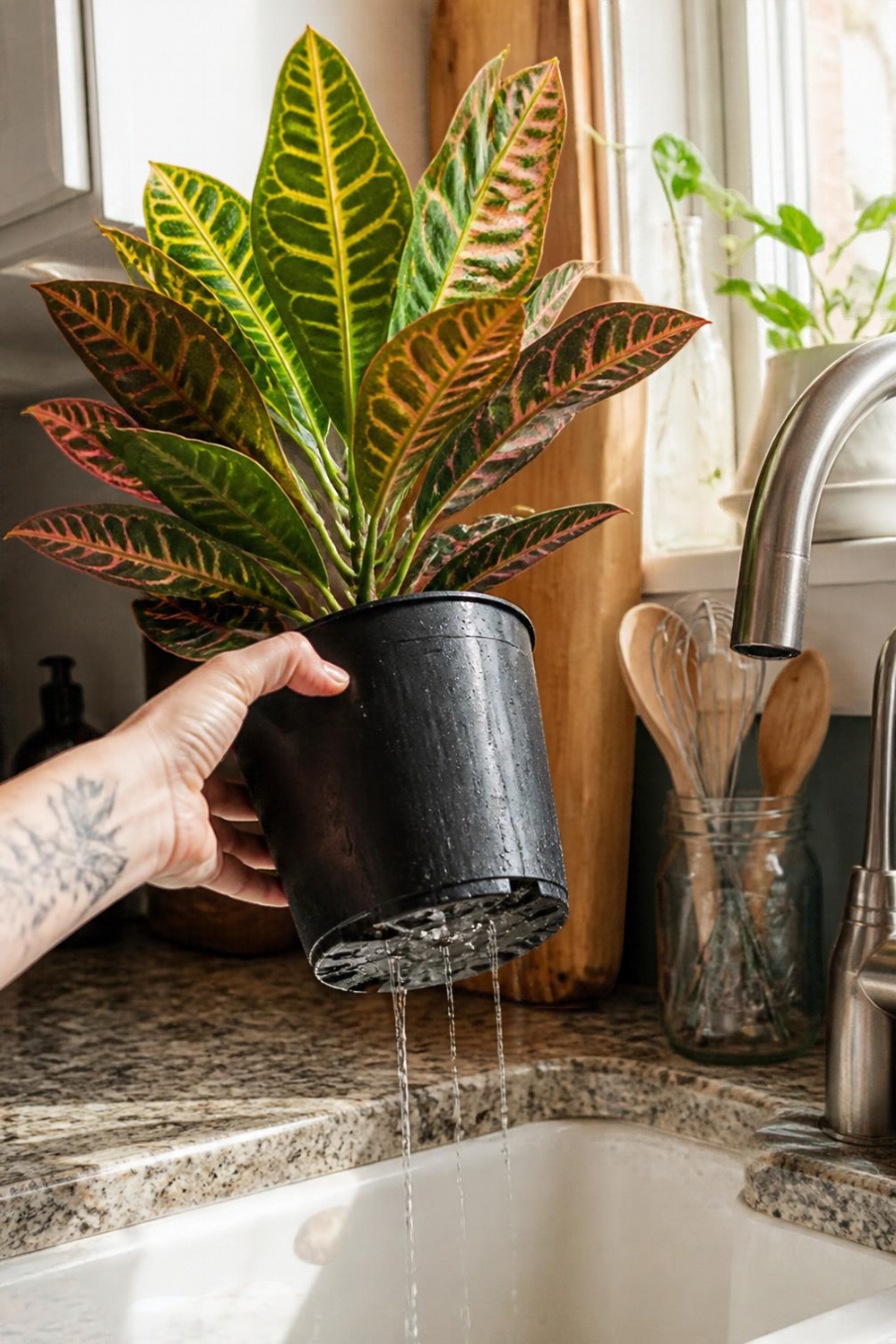
Check the bottom of the pot. Virginia Cooperative Extension includes clearing blocked drainage holes among its fixes for an overwatered plant. Also look at the saucer. University of Connecticut Extension says to empty saucers and decorative outer pots within about an hour, and Virginia Cooperative Extension says not to leave a pot sitting in a tray of water for more than about 60 minutes.
The pot itself matters too:
- Unglazed clay dries out faster than plastic or glazed pots, according to University of Connecticut Extension. Plastic and glazed pots hold water longer.
- A pot that is too big holds more water than the roots can use, which can cause overwatering symptoms.
- A pot that is too small dries out faster and may need to be replaced with one size larger.
If the plant lives in a decorative pot without drainage holes, keep it in a plain pot with holes and set that inside. Then lift it out to water and let it drain.
How to Fix an Overwatered Plant
Stop watering and let the plant recover. If the roots are still healthy, that is often all it takes.
- Empty the saucer and any decorative outer pot.
- Make sure the drainage holes are open.
- Let the soil dry out fully. University of Illinois Extension says to start watering again gradually after that, not all at once.
- If the soil smells bad, the plant keeps wilting, or you see mushy stems, slide the plant out of the pot and look at the roots. Healthy roots are firm and white or light in color. Black, squishy, or smelly roots mean rot, according to the University of Arizona.
- If roots are rotted, trim the dead parts with clean scissors and repot in fresh, well-draining potting mix. Virginia Cooperative Extension also suggests pruning dead leaves and stems.
When you repot, pick a pot only one to two inches wider than the old one, so you do not create a new problem. Our guide to repotting a plant in 9 steps shows how.
How to Fix an Underwatered Plant
Many underwatered plants can be saved. The method depends on how dry the soil is.
If the Soil Is Just Dry
Water it thoroughly. Colorado State University Extension says to pour water over the soil until it drains into the saucer, then check that the soil below the surface is evenly moist. University of Connecticut Extension says to keep going until water seeps out of the drainage holes, which takes about a minute. Then pour out the saucer.
Small sips are not enough. University of Connecticut Extension warns that light waterings encourage poor, shallow root growth.
If the Soil Has Shrunk Away from the Pot
Very dry potting mix can pull away from the sides of the pot. Then water runs down the gap and out the bottom without soaking in. Colorado State University Extension and the University of Maryland both point to this as a sign of dry soil.
You have two options:
- Soak the pot. University of Connecticut Extension says to submerge the pot in water until the bubbles stop, then let it drain.
- Bottom water. Virginia Cooperative Extension suggests setting the pot in two to three inches of water for 15 to 30 minutes, and never longer than 60 minutes. Refill the saucer several times and check between rounds, until the soil is moist throughout.
The University of Maryland adds that a badly dried-out potting mix may need several rounds of watering to rehydrate. When you finish, empty any water left in the saucer.
Try not to let a plant get this dry again. University of Connecticut Extension notes that each time it happens, it causes some root injury.
Will It Recover?
Usually, yes, if the drought was short. The University of Maryland says a brief wilt is harmless if the soil is still moist, but a long dry spell can cause yellowing, scorched or brown leaves, leaf drop, and stunted growth. Leaves that are already crispy will not turn green again. Trim them off and watch for new growth.
Not Every Plant Wants the Same Amount of Water
A big reason people overwater or underwater is that they treat every plant the same.
University of Illinois Extension says plant tags often describe water needs in words like these:
- Heavy: keep the soil constantly moist, but not soggy.
- Medium: water thoroughly and let the surface dry.
- Moderate: water thoroughly and let the soil dry.
- Light: moisten lightly and let the soil dry.
You can also learn a lot from the leaves. University of Connecticut Extension says plants with thick or waxy leaves, or few leaves, need less water, while plants with many soft, lush leaves need more.
Succulents and cacti sit at the far end. The University of Minnesota says to let their soil dry out completely between waterings, and that cacti need less water than other succulents. Virginia Cooperative Extension says succulents and cacti may need water only once or twice a month, while tropical plants may need it once or twice a week. If you grow a succulent, our jade plant care guide shows what this looks like in practice.
If you are just starting out, a forgiving plant gives you room to learn. Take a look at our list of low maintenance house plants.
Watering in Winter
Winter is when many people get it wrong.
University of Nebraska Extension says plants brought indoors for the cold months need much less water, because there is less light, cooler temperatures, and no drying wind. A plant that needed water every day in July may need it only weekly, or less, in winter. The same source warns that more houseplants die from overwatering than from any other cause.
But winter can pull the other way too. University of Connecticut Extension says plants dry out faster near heat sources, which is common indoors in winter, so check them more often there.
The lesson is simple: do not follow the calendar. A plant on a sunny sill near a heater may dry out in days, while a plant in a cool, dim corner may stay wet for weeks. Check the soil, every time.
Watering Habits That Prevent Both Problems
- Check the soil before you water. Skip the calendar.
- Water thoroughly, until water comes out the bottom, then empty the saucer.
- Use pots with drainage holes.
- Match the pot size to the plant. Do not jump to a much bigger pot.
- Water in the morning if you can. Virginia Cooperative Extension suggests this so the plant can use the water during the day.
- Use room-temperature water. University of Connecticut Extension also recommends avoiding softened water, which adds sodium that can build up in the soil.
One more thing about method. Colorado State University Extension says top watering is generally the better choice, because bottom watering can let salts build up in the soil. If you do bottom water, water from the top once in a while to flush the salts out.
Frequently Asked Questions
Which Is Worse, Overwatering or Underwatering?
Overwatering is the more common way to lose a houseplant. University of Illinois Extension calls it the biggest cause of houseplant death, and Virginia Cooperative Extension says leaning toward the dry side is safer. A long drought can still do serious damage, so the best answer is to water only when the plant needs it.
Can an Overwatered Plant and an Underwatered Plant Both Wilt?
Yes. That is the trap. Check the soil before you do anything else.
How Long Should I Wait to Water Again After Overwatering?
Wait until the soil has dried out, then check it with your finger. How long that takes depends on the plant, the pot, the light, and the room. There is no fixed number of days.
Should I Use a Moisture Meter?
It can help, especially in large pots where it is hard to feel the bottom. Virginia Cooperative Extension lists meters as one option, along with the finger test. I would use the meter and my finger together until I trusted both.
How Often Should I Water My Houseplants?
It depends on the plant, the light, the temperature, the pot, and the season. Extension sources agree that you should check the soil instead of following a weekly schedule.
Does Water Temperature or Type Matter?
Room-temperature water is best. University of Connecticut Extension suggests letting tap water sit for a day, and University of Illinois Extension suggests at least 24 hours so some chemicals can dissipate. Avoid softened water if you can.
Why Does Water Run Straight Through My Pot?
Usually the soil is very dry and has pulled away from the pot, or it has become water-repellent. Virginia Cooperative Extension says peat- or bark-based mixes are especially likely to repel water. Soak the pot or bottom water it in a few rounds, as described above.
Final Thoughts
A drooping plant is asking for help, but it does not tell you which kind.
The soil does. Feel it, lift the pot, and look at the drainage. In most cases that takes less than a minute and answers the question.
After that, the fix is simple. If it is too wet, stop and let it dry, and repot only if the roots are rotted. If it is too dry, water thoroughly, and soak the pot if the soil has pulled away.
Over time you will learn how each plant in your home behaves, and the guessing will stop. If you want more help with the basics, see our beginner's guide to houseplant care and the list of 11 houseplant mistakes.
References
- Colorado State University Extension: Houseplants, Watering
- University of Connecticut Extension: Houseplant Watering Recommendations
- University of Illinois Extension: How to Water Houseplants
- Virginia Cooperative Extension: Properly Watering Container Houseplants
- University of Maryland Extension: When Houseplants Become Too Dry
- University of Nebraska-Lincoln Extension: Winter Care of Indoor Plants
- University of Minnesota Extension: Cacti and Succulents
- University of Arizona Cooperative Extension: Indoor Plant Care