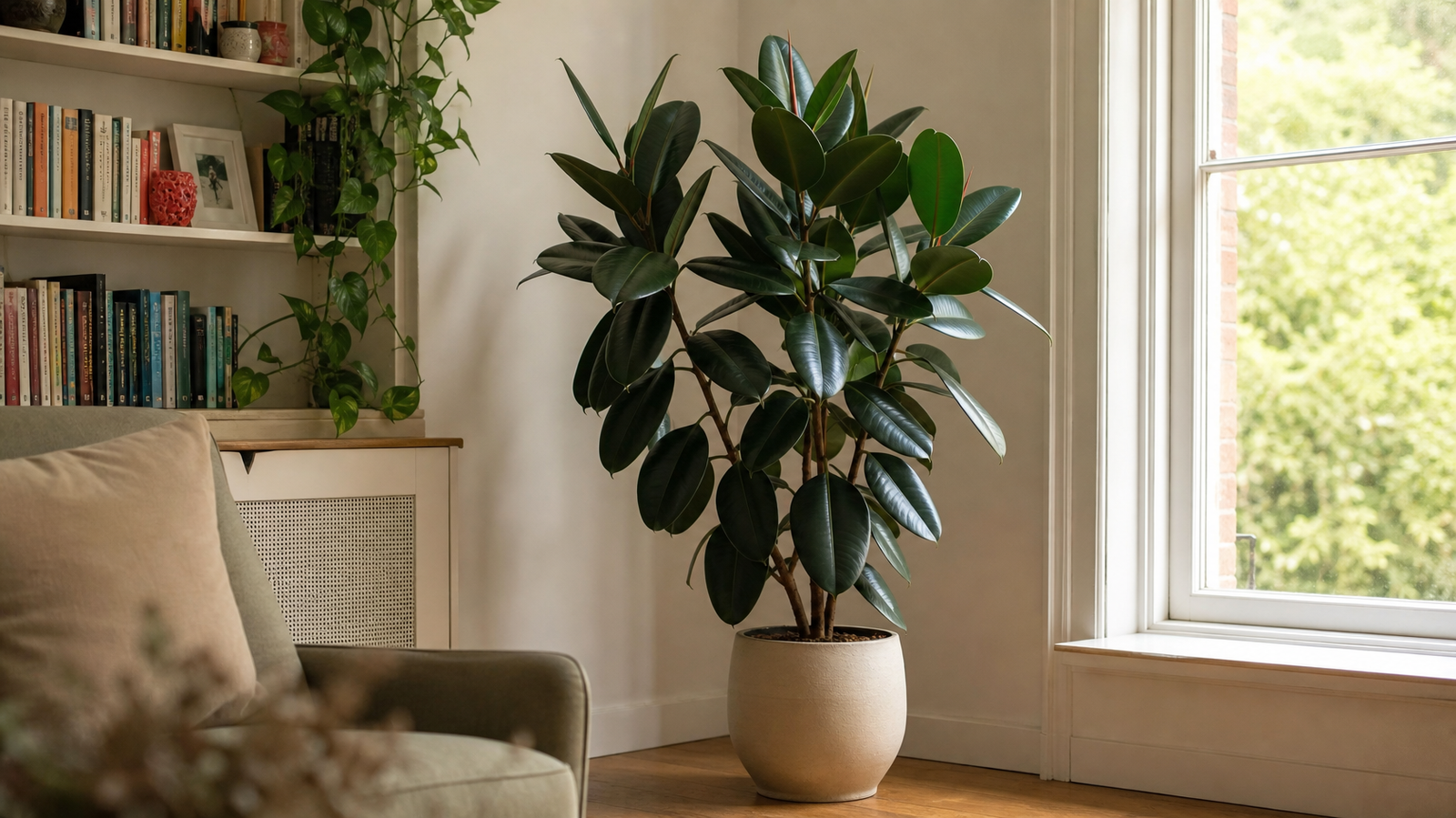
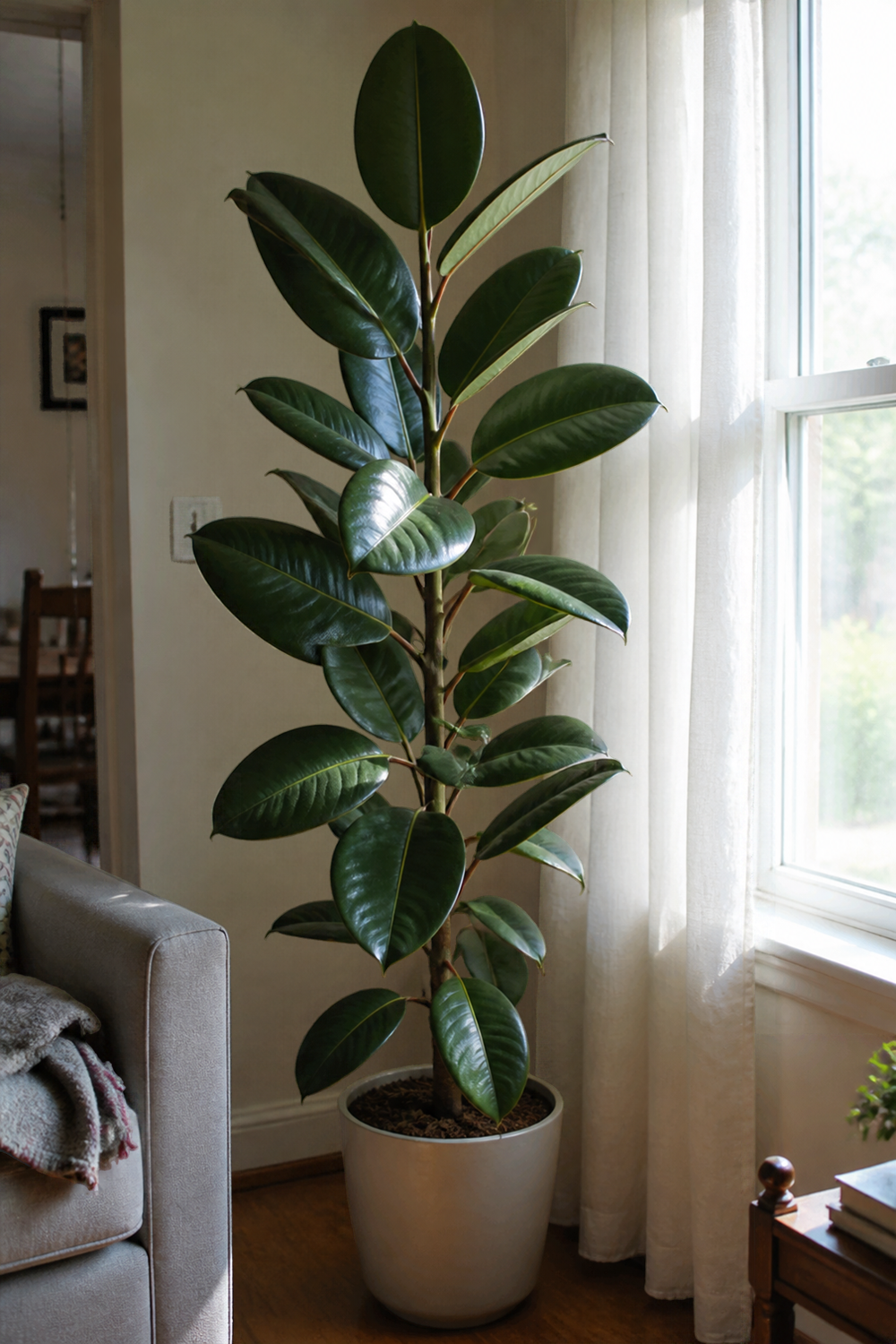
A healthy rubber plant is hard to beat. The leaves are big, thick, and shiny, and the plant grows like a small indoor tree. It fills an empty corner better than almost anything else.
But many people bring one home and watch it drop leaves within a few weeks. That is the most common complaint about this plant, and it is almost always fixable once you know what the plant wants.
This guide covers everything you need: light, water, temperature, feeding, pruning, and what to do when leaves fall. It is based on Extension and university sources, so you can trust the advice. If you are still choosing plants, our list of tall houseplants shows how a rubber plant compares with other floor plants.
The Short Answer
- Light: bright, indirect light is best. Clemson Extension says rubber plants tolerate low light, but an east-facing window works best.
- Water: water thoroughly, then let the top of the soil dry slightly before watering again. Use a pot with drainage holes.
- Temperature: keep it above 55 degrees Fahrenheit, and away from cold drafts.
- Leaf drop: usually caused by too much water, too little light, dry air, cold drafts, or a recent move.
- Pets: the sap can irritate skin and may upset the stomach if eaten. Keep it away from pets.
1. Meet the Rubber Plant
The rubber plant is Ficus elastica. It is a relative of the fiddle leaf fig, but it is more forgiving. In the wild it can reach about 100 feet. Indoors it stays much smaller. Clemson Extension says it can reach 6 to 10 feet or taller if it has room, and pruning keeps it smaller. North Carolina State Extension says indoor plants usually stay at 2 to 10 feet with training or support.
Two other things are worth knowing. First, North Carolina State Extension notes that it rarely flowers indoors. Second, it prefers to stay in one spot, which matters when we get to leaf drop below.
2. Light
Light is the first thing to get right.
Clemson Extension says rubber plants prefer bright light but tolerate low light, and that a window with morning sun, like an east-facing window, works best. North Carolina State Extension agrees: bright, indirect light is ideal, and you should protect the plant from afternoon sun.
What happens in low light? A master gardener answering a question on the Ask Extension service explains that too little light makes the stems grow long gaps between the leaves, and the plant may shed older leaves. In other words, the plant stretches and thins out.
Easy Ways to Judge Your Light
- If the plant is in the middle of a room away from windows, it may be too dim. Move it closer to a window.
- If the leaves look pale or have dry, scorched patches, move it back from the glass or add a sheer curtain.
For more on judging light, see our guide to natural and supplemental indoor light.
3. Watering
Rubber plants do not like sitting in wet soil, but they also do not like to dry out completely.
Clemson Extension says to water thoroughly, then let the top of the soil dry slightly before watering again. It also says to make sure the pot has drainage holes and to empty any water that collects in the saucer. North Carolina State Extension says to water regularly but avoid overwatering, and to cut back on watering when the plant is resting, from fall through late winter.
The Ask Extension answer adds a good rule: water by the soil, not by the calendar. The person who asked had switched between weekly and every-other-week watering, and the advice was to check the soil first each time.
A Simple Routine
- Push a finger into the soil about an inch or two.
- If the top is damp, wait a few days and check again.
- If it is dry, water until water runs out the bottom of the pot.
- Empty the saucer after about 15 minutes.
- In fall and winter, expect to water less often.
If you are not sure whether your plant is getting too much or too little, our guide on how to tell if a houseplant is overwatered or underwatered will help.
4. Temperature and Humidity
Clemson Extension suggests about 60 to 65 degrees at night and 75 to 80 degrees during the day, and says to keep the plant above 55 degrees. Both Clemson and North Carolina State Extension say to avoid cold drafts. Clemson adds to avoid sudden temperature drops.
Humidity is not a big concern. Clemson says rubber plants like humid air but tolerate the dry air common in homes. North Carolina State says medium humidity is best.
Where you put the plant matters. Keep it away from cold windows in winter, front doors that open often, and air conditioning or heating vents blowing right on it.
5. Soil, Pots, and Repotting
Use a well-draining potting mix. North Carolina State Extension suggests a soil-based mix with good drainage, and notes the plant tolerates dry soil. Always use a pot with drainage holes.
Repot when needed, and do it at the right time. Clemson Extension says late winter or early spring. Go up just one pot size. Our guide on how to repot a plant in 9 steps covers the whole process.
6. Feeding
Clemson Extension says to feed every two weeks with a water-soluble houseplant fertilizer during spring and summer. It also says plants in lower light need less. Skip feeding in fall and winter, when the plant is resting.
If that sounds like a lot, you can feed less often. Follow the label on your fertilizer and use the lower end of the amount. For gentler options, see our guide to organic fertilizers.
7. Why Rubber Plants Drop Leaves
This is the question most owners ask. First, some good news. North Carolina State Extension says yellowing and dropping of a few lower leaves is normal. A plant that loses one old lower leaf now and then while new leaves grow at the top is fine.
If many leaves are falling, or leaves are yellowing quickly, look at these causes:
Too Much Water
Clemson Extension says yellowing often means the soil stays too wet, and that root rot usually comes from poorly draining soil or watering too often. North Carolina State Extension lists overwatering as a cause of leaf loss. Check the soil. If it is wet and the leaves are yellow, let it dry out and look at the pot for drainage problems.
Too Little Light
Clemson Extension lists too little light as a cause of leaf loss. As mentioned above, the Ask Extension answer says low light can lead to shed older leaves and long gaps between leaves.
Dry Air
Clemson Extension also lists dry air as a possible cause. If the plant sits next to a heating vent or in a very dry room, move it away from the vent.
Cold Temperatures and Drafts
Clemson and North Carolina State Extension both name cold and drafts as causes of leaf loss. If your plant is near a leaky window or a door, move it.
A Recent Move
North Carolina State Extension says the rubber plant prefers to stay in one place. A new home, a new window, or a trip from the store can make a plant drop a few leaves while it adjusts. Pick a good spot and then leave it alone.
For a broader list of causes for yellow leaves, see our guide on why houseplant leaves turn yellow.
8. Pruning for a Fuller Plant
A rubber plant left alone grows tall and narrow, with few branches. That is a nice look for some rooms. If you want a bushier plant, you need to prune.
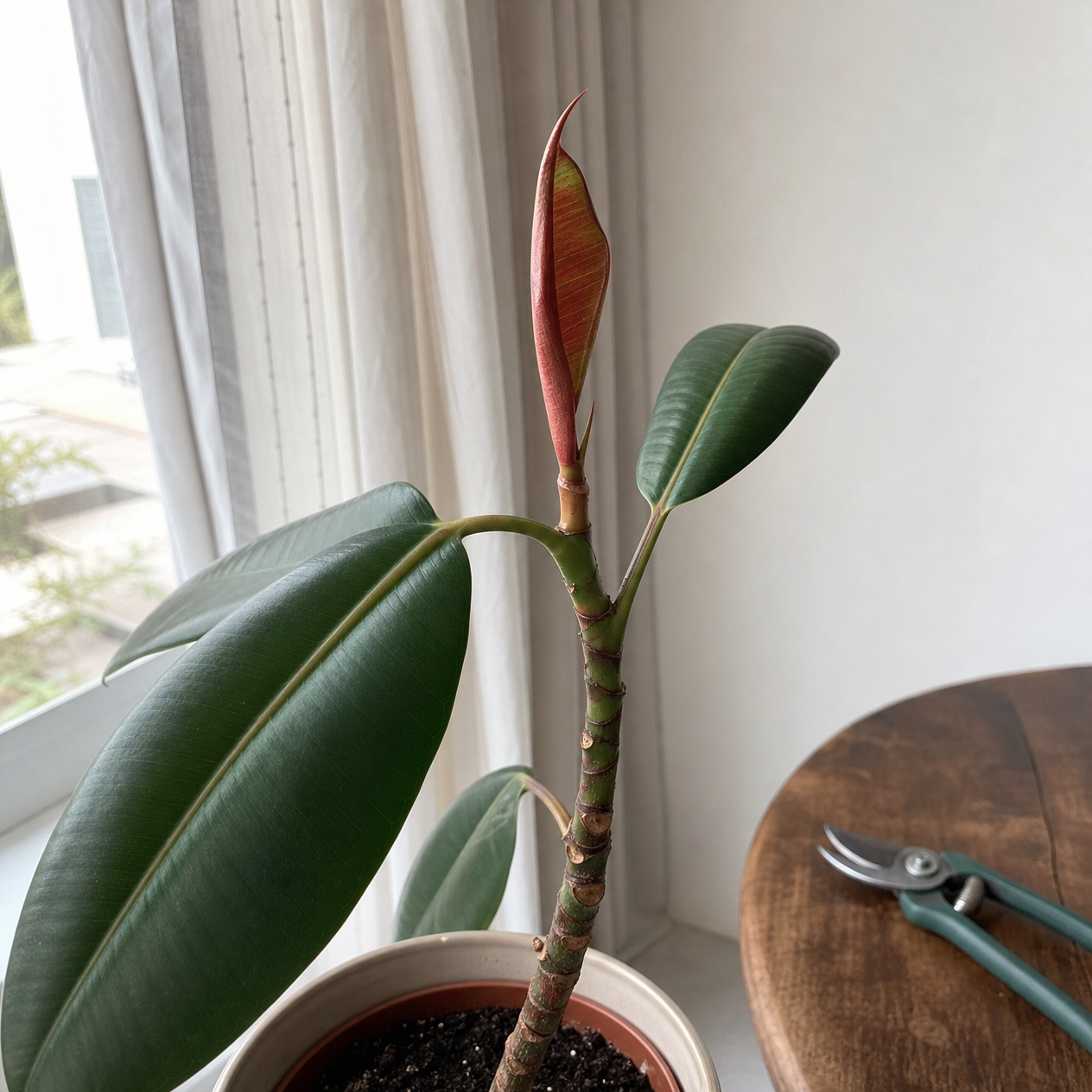
North Carolina State Extension says to cut main branches to encourage a bushier shape, and to leave the plant unpruned if you want a tall, narrow, tree-like form. Clemson Extension says to prune in spring to rejuvenate the plant or control its height, and that tall, leggy plants can be staked.
Pruning Tips
- Prune in spring, when the plant is starting to grow.
- Use clean, sharp scissors or pruning shears.
- Expect white sap to ooze from the cut. North Carolina State Extension notes that cut leaves ooze sap. Wear gloves if you have sensitive skin, and keep the sap off your skin.
- Do not cut off more than you need to. Take a little at a time.
9. Keeping the Leaves Glossy
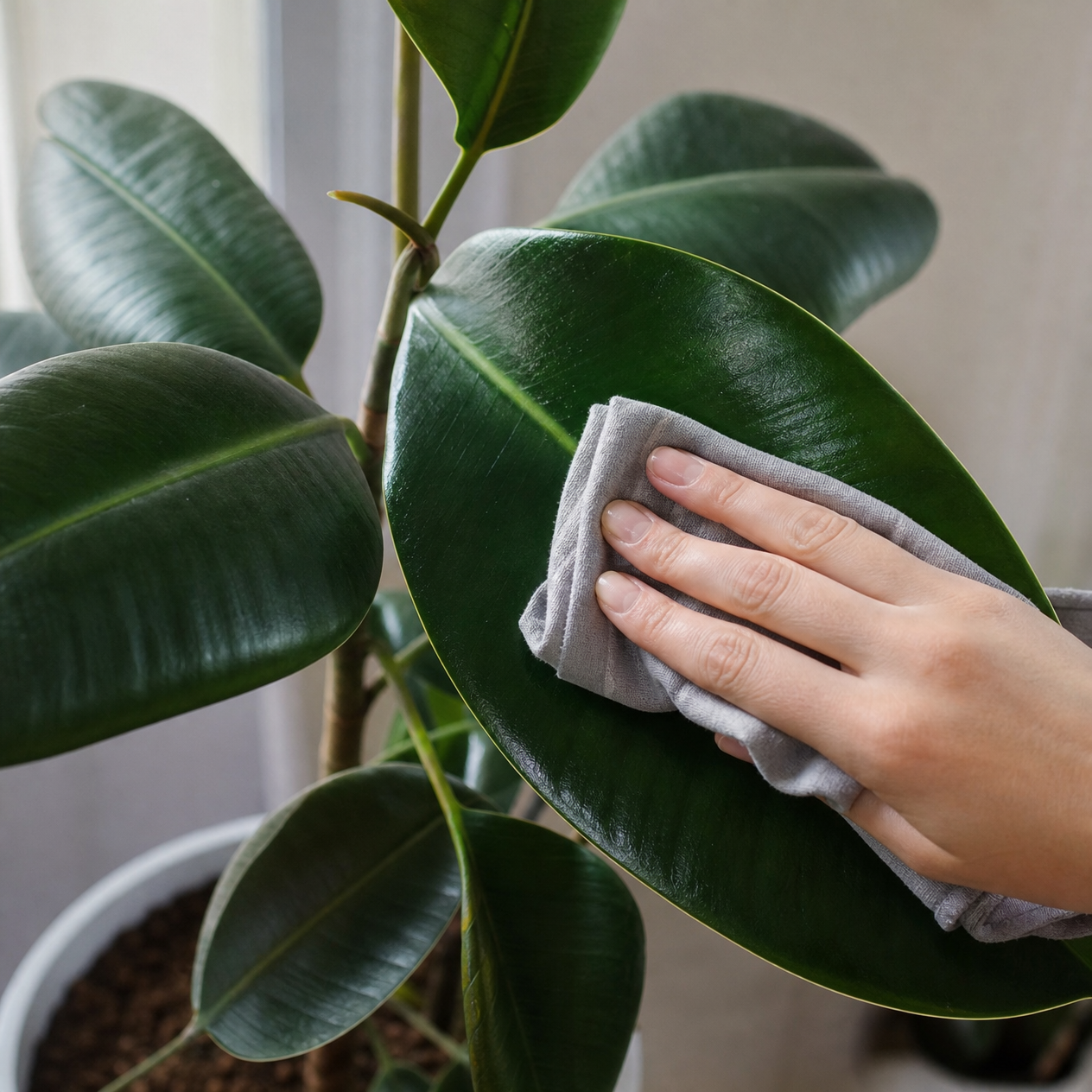
Big leaves collect dust, and dusty leaves look dull and block light. North Carolina State Extension says to wipe the leaves with a damp, soft cloth. Clemson Extension says to rinse dusty leaves with water to keep them glossy and healthy.
A wipe every month or so works well. Support the leaf with one hand as you wipe, so you do not tear it. If dust is a problem in your home in general, our guide to houseplants that help reduce dust may be useful.
10. Pests
Clemson Extension says mealybugs are a common problem with rubber plants, along with other insects and mites. North Carolina State Extension lists mealybugs, scale, and spider mites as the main concerns. Both say diseases are rarely a problem.
What to Look For
- White, cottony spots near leaf joints or on the underside of leaves: mealybugs.
- Small brown bumps on stems and leaf veins that do not wipe off easily: scale.
- Fine webbing and speckled leaves: spider mites.
- Sticky leaves: often a sign of one of the above.
Check the underside of leaves when you wipe them. If you find pests, wipe them off with a damp cloth and keep checking every few days. For more options, read our guide to organic bug sprays and natural solutions.
11. Growing New Rubber Plants
Clemson Extension says you can propagate a rubber plant from stem or tip cuttings, or by air layering. North Carolina State Extension lists layering as well.
Air layering is a good method for a tall, leggy plant. You wound a section of stem, wrap it with moist material until roots form, then cut it off and pot it. It takes more patience than a cutting, but it gives you a bigger new plant, and it can shorten the original. If you try cuttings, remember the sap, and wear gloves.
12. Is a Rubber Plant Safe for Pets?
No. Clemson Extension says the white sap can irritate skin and may upset the stomach if eaten, and to keep the plant away from pets and small children who chew on plants. North Carolina State Extension lists it as a problem for cats, dogs, and horses.
Be careful about one name mix-up. The ASPCA lists a plant called American rubber plant as non-toxic to dogs, cats, and horses. That is a different plant, Peperomia obtusifolia. It is not the same as Ficus elastica, so do not assume the rubber plant is safe because of that listing.
If you think your pet has chewed on a rubber plant, call your veterinarian or the ASPCA Animal Poison Control Center at (888) 426-4435. A fee may apply. For pet-safe options, see our guides to non-toxic indoor plants and pet-friendly plants.
Common Rubber Plant Problems at a Glance
- Yellow leaves, wet soil: too much water.
- Many leaves dropping, long gaps between leaves: not enough light.
- Leaves dropping after a move: the plant is adjusting.
- Leaves dropping near a window or door in winter: cold or a draft.
- Dull, dusty leaves: wipe them down.
- Tall, thin, bare stem: prune in spring for a bushier plant.
- Cottony spots or webbing: mealybugs or spider mites.
For more on avoiding common care errors, see our list of common houseplant mistakes, and our beginner's guide to houseplant care.
Frequently Asked Questions
Why is my rubber plant dropping leaves?
The most common causes are too much water, too little light, dry air, cold drafts, or a recent move. Losing a few lower leaves from time to time is normal.
How often should I water a rubber plant?
There is no fixed schedule. Water thoroughly when the top of the soil has dried slightly, and water less in fall and winter.
Can a rubber plant live in low light?
It can tolerate it, according to Clemson and North Carolina State Extension. But it will grow thinner and may shed older leaves. Bright, indirect light is better.
How big does a rubber plant get indoors?
Clemson Extension says 6 to 10 feet or taller with room. North Carolina State Extension says usually 2 to 10 feet with training or support. Pruning keeps it smaller.
How do I make my rubber plant bushier?
Prune the main branches in spring. This encourages the plant to grow new branches instead of one tall stem.
Should I wipe the leaves?
Yes. Wiping off dust with a damp, soft cloth keeps the leaves glossy and lets in more light.
Is the sap dangerous?
The sap can irritate skin and may upset the stomach if eaten. Wear gloves when you prune and keep the plant away from pets and small children.
Is a rubber plant the same as a fiddle leaf fig?
No. They are both in the fig family and look somewhat alike, but they are different plants. Rubber plants are generally easier to care for.
Final Thoughts
A rubber plant needs three things: bright, indirect light, soil that dries slightly between waterings, and a spot where it can stay put. Get those right and leaf drop becomes rare.
Wipe the leaves now and then, prune in spring if you want a fuller plant, and keep an eye out for mealybugs. After that, the plant mostly takes care of itself, and a healthy one will keep growing for years.