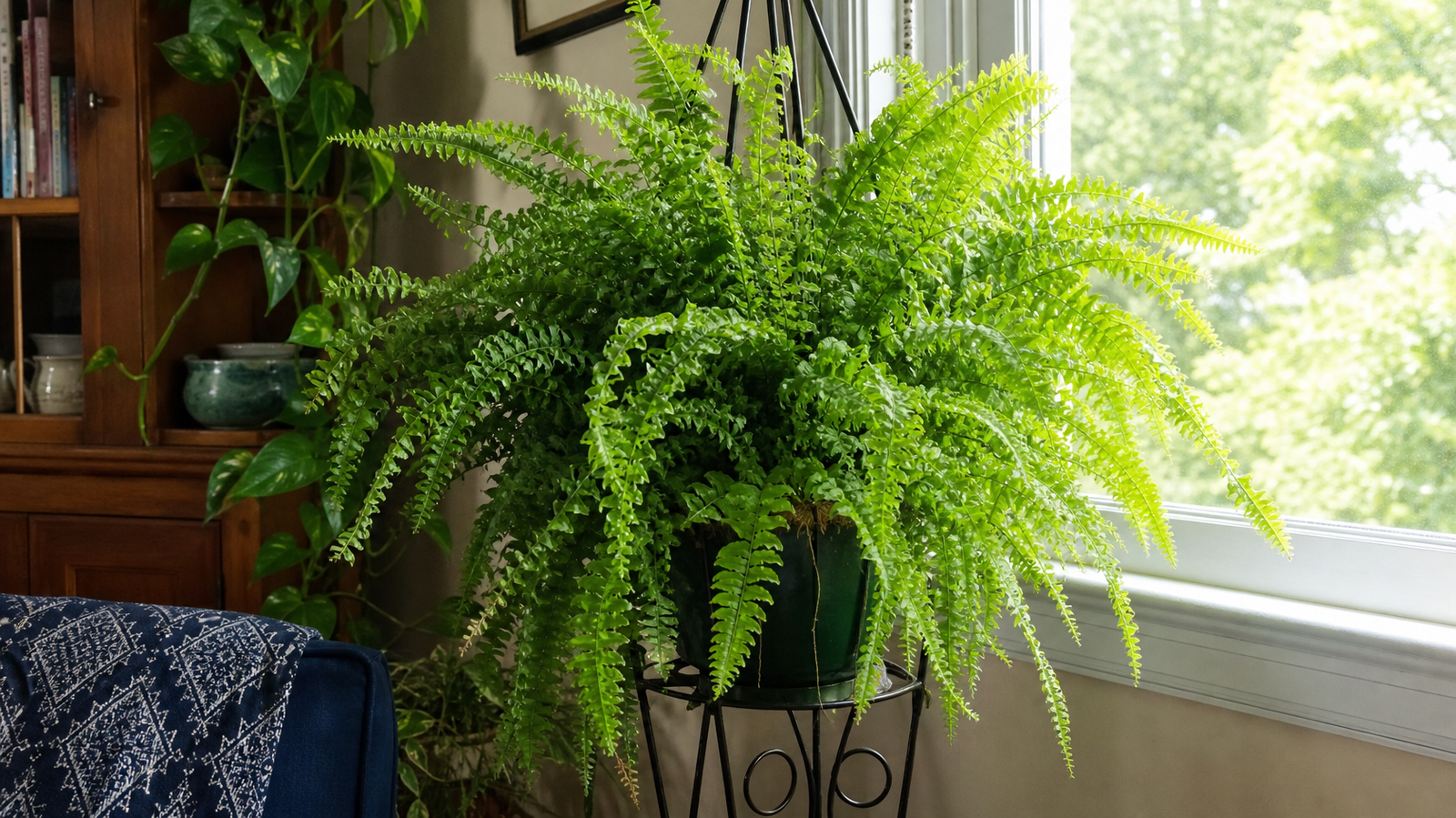
You bring home a big, full Boston fern, and it looks great for a few weeks. Then the tips turn brown, tiny leaflets fall all over the floor, and the plant starts to look thin.
Almost every fern owner goes through this. Boston ferns have a reputation for being fussy, but they are actually predictable. They want steady moisture, gentle light, and humid air. Indoor air is often too dry for ferns, according to Clemson Extension, and that is where most of the trouble starts.
This guide shows you how to give a Boston fern what it needs, what each problem means, and how to bring a tired plant back. If you want more plants for a hanging basket, our list of top indoor hanging plants has more ideas.
The Short Answer
- Light: medium to bright, indirect light, such as an east window or a spot behind a sheer curtain.
- Water: keep the soil evenly moist, never soggy and never bone dry.
- Humidity: ferns need high humidity. A humidifier or a pebble tray helps a lot, especially in winter.
- Brown tips: usually dry air, soil that dried out, or too much fertilizer.
- Pets: North Carolina State Extension tags the plant as non-toxic for cats, dogs, and horses.
1. What a Boston Fern Wants
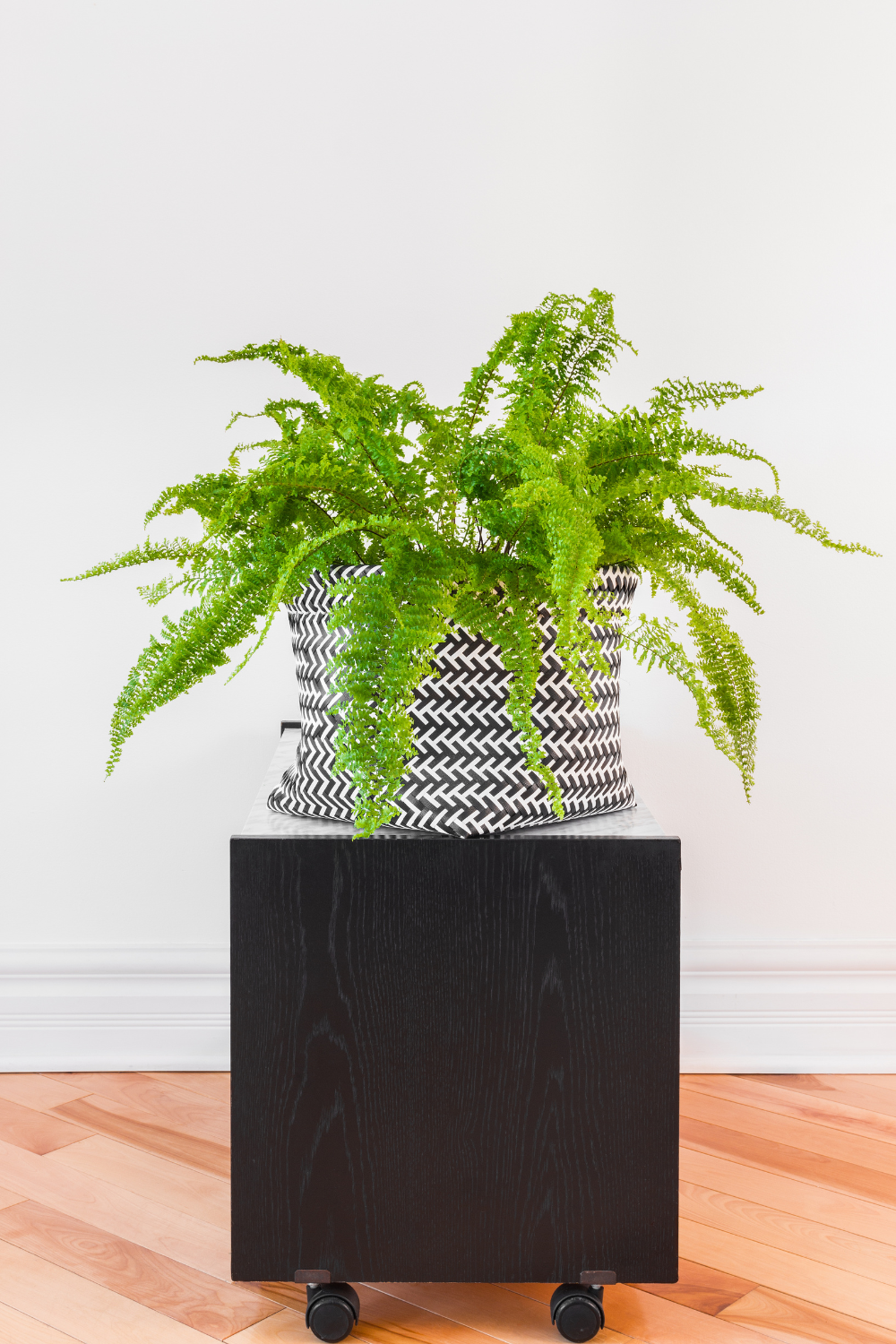
Boston ferns (Nephrolepis exaltata) grow in warm, damp places in the wild. North Carolina State Extension says they do best in bright, indirect light with high humidity, and that kitchens and bathrooms can work well for this reason. Indoors, they usually grow about 2 to 3 feet tall and wide, according to the same source.
Keep that picture in mind. Most care problems come from treating a fern like a typical dry-air houseplant.
2. Light
Ferns do not like harsh sun. University of Minnesota Extension suggests medium light, such as an east-facing window or a spot a few feet from a west or south window. University of Wisconsin Extension suggests medium bright light, like an east window or a spot behind a sheer curtain in a south- or west-facing window.
Clemson Extension says Boston ferns tolerate bright indirect or filtered sun, and warns never to put ferns directly in a south or west window. Minnesota adds that in short winter days, from November through February, you can place them directly in a west or south window, but you should filter the sun as it gets stronger.
Too much sun can burn the fronds. If you are unsure about your rooms, our guide to natural and supplemental indoor light can help.
3. Humidity: The Part Most People Miss
Dry air is the biggest problem for Boston ferns. University of Wisconsin Extension says dry indoor air, especially in winter, can cause browning on the tips and edges of the leaflets. Clemson Extension says Boston ferns need high humidity to thrive.
Ways to Raise Humidity
- Use a humidifier. University of Minnesota Extension recommends a room humidifier.
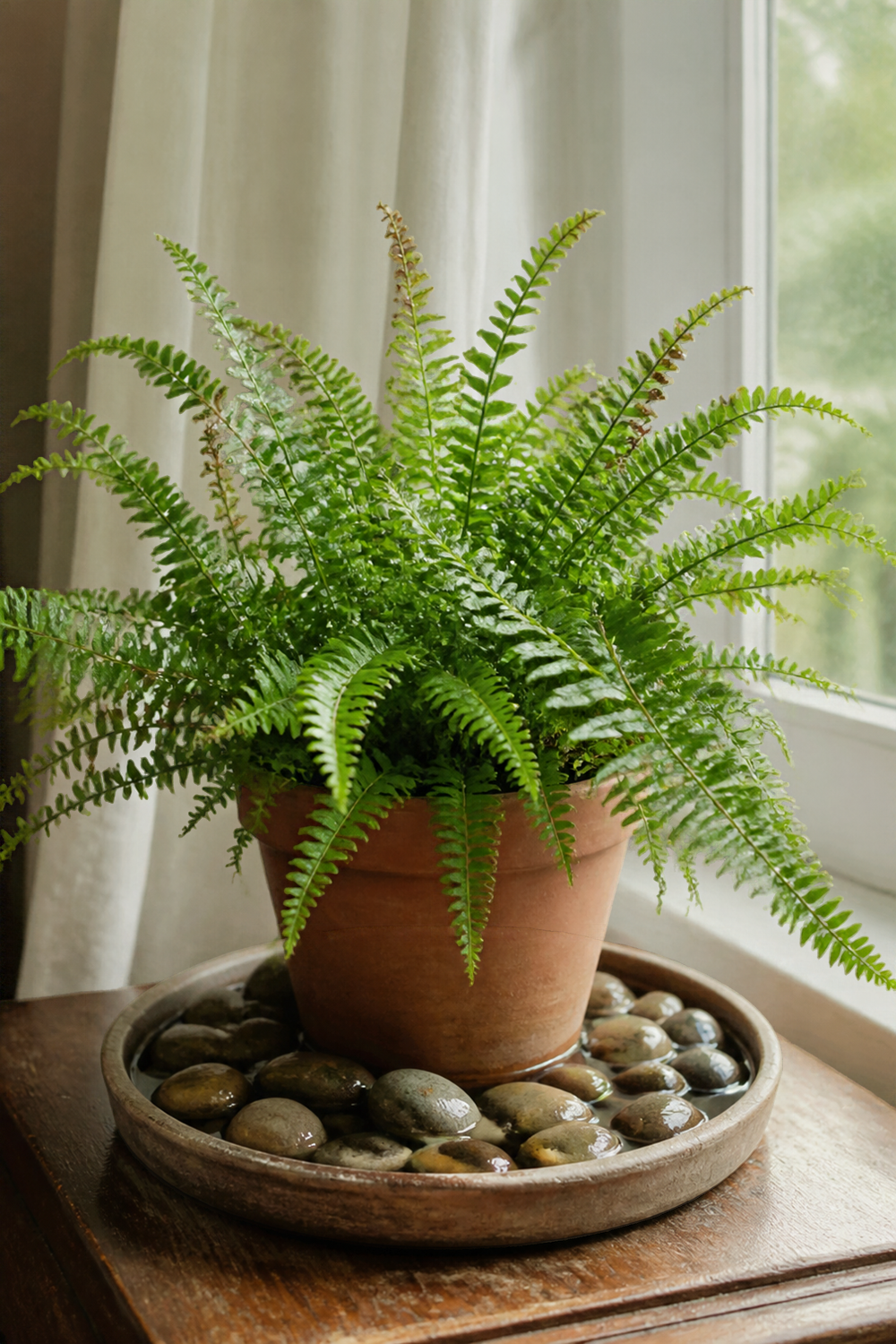
- Use a pebble tray. North Carolina State Extension suggests setting the pot on a tray of wet pebbles. The New York Botanical Garden suggests a tray about 1 inch deep with clean pebbles, with the water just below the top of the pebbles so the pot is not sitting in water.
- Double pot. University of Wisconsin and Clemson Extension suggest setting the pot inside a larger container packed with moist sphagnum moss.
- Pick a humid room. A bathroom or kitchen with a bright window can work well.
What about misting? Sources disagree. Clemson says you can mist the fronds occasionally. University of Minnesota Extension says misting is not very effective and can encourage leaf spot diseases. A humidifier or pebble tray is the safer choice.
4. Watering
The goal is soil that stays evenly moist. University of Minnesota Extension says to keep it never very dry but never constantly wet. It also says to water thoroughly until water drains out the bottom, then empty the saucer after a few minutes, and to wait until the soil surface feels dry before watering again, since soggy soil promotes root rot.
Clemson Extension says Boston ferns should stay barely moist at all times. Never let the soil dry out completely, and do not let water sit in the pot.
Water Tips
- Use room-temperature or lukewarm water. University of Minnesota Extension says cold water can harm roots.
- Avoid softened water. Minnesota says it builds up salts in the soil.
- Check often. Small pots and hanging baskets dry out faster than you expect, especially near ceilings where the air is warm and dry.
What about winter? Extension sources give slightly different advice. North Carolina State Extension says to water less in winter when the plant is resting, since overwatering can cause root rot. The New York Botanical Garden warns to avoid letting the soil dry out too much between waterings in winter, since that is a common cause of brown tips. The safe middle: water less often if the plant uses less, but do not let the pot dry out. If the soil is wet and root rot is a worry, our guide on how to tell if a houseplant is overwatered or underwatered will help.
5. Temperature
Boston ferns like normal room temperatures and cooler nights. Extension sources give these ranges:
- North Carolina State Extension: about 60 to 70 degrees Fahrenheit.
- University of Wisconsin Extension: nights around 65 degrees, and days not higher than 95 degrees. Protect the plant when temperatures fall to the low 40s.
- Clemson Extension: 68 to 72 degrees by day and 50 to 55 degrees at night.
In short, any comfortable room works. Keep the fern away from cold drafts and from heating vents. The New York Botanical Garden says a drafty or cold spot can make browning worse.
6. Soil and Repotting
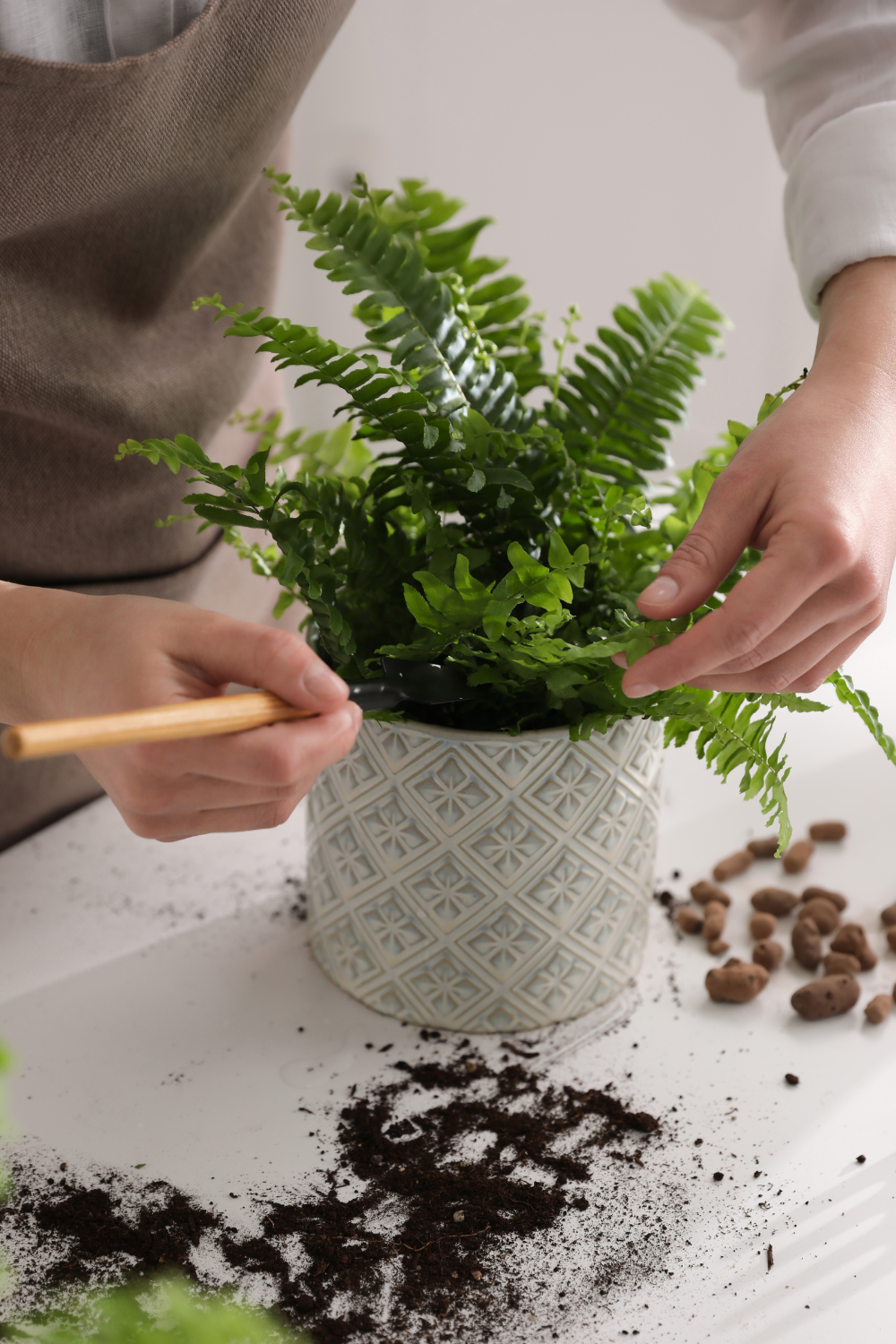
Use a mix that drains well but holds moisture. University of Minnesota Extension suggests a highly organic mix with a large share of peat moss. University of Wisconsin Extension suggests a well-drained but moisture-retaining medium, such as a peat and vermiculite mix. Clemson suggests equal parts packaged houseplant mix and peat moss or leaf mold when repotting.
When to repot: Clemson says early spring for overcrowded plants. University of Wisconsin Extension says every few years, in spring. The New York Botanical Garden says to keep the same pot size or go smaller unless the pot is tightly packed with healthy roots. If it is, move up to a larger pot.
Our guide on how to repot a plant in 9 steps covers the basics.
7. Feeding
Ferns do not need much fertilizer, and too much causes the brown tips you are trying to avoid.
- University of Minnesota Extension says to fertilize only during active new growth, or when the fronds look paler than normal. It suggests fish emulsion, or other houseplant fertilizers diluted to half strength.
- University of Wisconsin Extension says to feed every 4 to 6 weeks during active growth with a half-strength fertilizer, and to cut back a lot in winter.
- Clemson Extension says to feed lightly once a month from April through September at half the label rate, and skip winter.
Both Minnesota and Wisconsin say that over-fertilizing causes browning at the tips of the fronds. Pale, washed-out fronds usually signal low nutrients, according to Minnesota. If you are unsure, start with less. Our guide to organic fertilizers can help you choose a gentle option.
8. Why the Tips Turn Brown
Brown tips can come from a few causes. Check them in this order:
- Dry air. The most common cause. University of Minnesota, University of Wisconsin, and Clemson Extension all point to low humidity. Minnesota notes it is worse in hanging baskets near the ceiling, where the air is hot and dry.
- Soil that dried out. The New York Botanical Garden says letting the soil dry too much between waterings, especially in winter, is a common cause.
- Too much fertilizer. Minnesota and Wisconsin say over-fertilizing browns the frond tips.
- Drafts or a cold spot. The New York Botanical Garden lists this as a factor.
If you see brown dots on the underside of the fronds, do not panic. North Carolina State Extension says these are spores, not insects or disease.
9. How to Revive a Thin, Crispy Fern
A fern that looks bad in winter is often fixable in spring.
- Trim off the brown fronds. The New York Botanical Garden says to do this in winter. University of Wisconsin Extension says to cut old fronds off at the soil to encourage new growth.
- For a very tired plant, the New York Botanical Garden says you can cut the whole plant back to about 2 to 3 inches in spring to encourage fresh growth.
- Fix the cause. Raise the humidity, water more evenly, and cut back on fertilizer if you have been feeding a lot.
- Move the plant to brighter light in late spring and summer. The New York Botanical Garden says brighter light then encourages new growth.
10. Dividing a Boston Fern
A large fern can be divided into several plants. University of Wisconsin Extension says to repot or divide every few years in spring. Cut the root ball vertically into halves or quarters with a sharp knife, keeping as many leaves as possible on each section. Clemson Extension also says division is the best propagation method.
11. Pests and Cleaning
Boston ferns have few pests, but a few show up. North Carolina State Extension names scale insects and spider mites, especially when indoor air is too dry. Clemson Extension adds that Boston ferns are also prone to mealybugs.
Be careful with sprays. Clemson says pesticides can injure ferns, so read the label, test on a few leaves first, and watch for damage. Small infestations can often be removed by hand, or by spraying the plant with water outdoors. For gentler options, see our guide to organic bug sprays and natural solutions.
Dust can also be a problem. University of Minnesota Extension says dust can hold mites and insects and blocks light. It suggests gently spraying the fronds with lukewarm water, or swishing them in lukewarm water with a few drops of mild dish soap.
One more tip from Clemson: the fronds are fragile, so keep the fern out of high-traffic areas.
12. Is a Boston Fern Safe for Pets?
North Carolina State Extension tags the Boston fern as non-toxic for cats, dogs, and horses. It does not address toxicity for people. Clemson Extension suggests checking the ASPCA toxic plant list before bringing a fern into a home with children or animals, so it is a good idea to check there too.
For more pet-safe choices, see our guides to non-toxic indoor plants safe for pets and pet-friendly plants. If you like small ferns, our lemon button fern care guide is another good one for humid spots.
Quick Guide: Match the Symptom to the Cause
- Brown tips and edges: dry air, soil that dried out, or too much fertilizer.
- Pale, washed-out fronds: usually low nutrients.
- Thin, sparse plant in winter: low humidity, cold spot, or dry soil.
- Mushy base, soggy soil: root rot from too much water or poor drainage.
- Brown dots under the fronds: spores, which are normal.
- Webbing or cottony spots: spider mites or mealybugs.
For a broader list of care errors, see our list of common houseplant mistakes, and our beginner's guide to houseplant care. If yellow fronds are your main problem, read why houseplant leaves turn yellow.
Frequently Asked Questions
Why is my Boston fern turning brown?
The most common cause is dry air. Soil that dried out and too much fertilizer are other common causes.
How often should I water a Boston fern?
There is no fixed schedule. Keep the soil evenly moist, water thoroughly, and empty the saucer. Check small pots often, since they dry out fast.
Should I mist my Boston fern?
Extension sources disagree. University of Minnesota Extension says misting is not very effective and can encourage leaf spots. A humidifier or pebble tray works better.
Can a Boston fern live in low light?
It does best in medium to bright, indirect light. University of Minnesota Extension says one compact type, the Dallas fern, tolerates lower light than Boston ferns.
Should I cut off brown fronds?
Yes. Trim old or brown fronds to the soil to make room for new growth.
Why is my Boston fern dropping tiny leaflets?
The Extension sources I reviewed do not explain leaflet drop directly. Dry air and uneven watering are the most likely causes, since those also cause browning. Check humidity and soil first.
How big does a Boston fern get?
North Carolina State Extension says typically 2 to 3 feet tall and wide, with fronds 2 to 3 feet long.
Is a Boston fern safe for cats and dogs?
North Carolina State Extension tags it as non-toxic for cats, dogs, and horses. It is still wise to check the ASPCA list, and to keep pets from chewing on any plant.
Final Thoughts
Boston ferns are not hard, but they need humid air, even moisture, and gentle light. If you can give those three things, the plant rewards you with thick, arching fronds.
If yours looks rough, do not give up on it. Trim off the brown fronds, fix the humidity, and give it a few weeks. Ferns bounce back more often than people expect.
References
- University of Minnesota Extension: Tropical Ferns
- University of Wisconsin Horticulture Extension: Boston Fern
- Clemson Cooperative Extension: Indoor Ferns
- North Carolina State Extension Plant Toolbox: Nephrolepis exaltata
- New York Botanical Garden: Why Does My Boston Fern Look Sparse and Have Brown Leaf Tips?