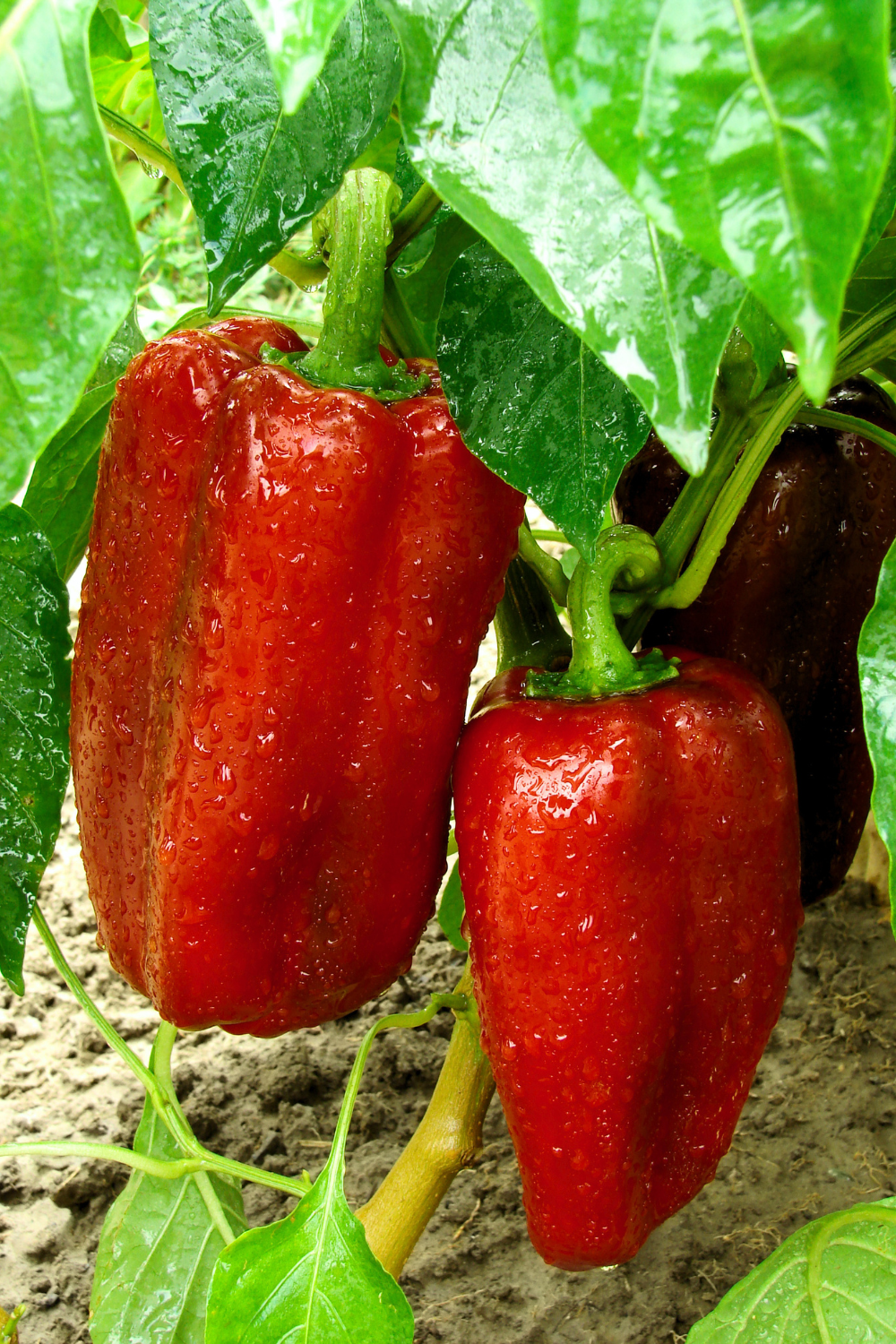
Peppers are not difficult plants, but they do have a few clear needs.
They want warm soil, strong sunlight, steady moisture, and enough open space for air to move around the leaves. Aphids, thrips, flea beetles, and other small pests can also become a problem, especially when plants are stressed or packed too closely together.
Companion planting can help, but only when every plant has a practical job.
A good pepper companion may bring beneficial insects into the garden, cover otherwise empty soil, produce an early harvest, or make better use of the edges of the bed. It should not crowd the pepper roots or turn the bed into a tangled collection of plants.
This guide focuses on useful combinations rather than gardening folklore. If you want to understand why some traditional pairings are more reliable than others, read our guide to companion planting myths and facts.
The Short Answer
The best companion plants for peppers are:
- Basil
- Onions and scallions
- Lettuce
- Sweet alyssum
- Cilantro
- French marigolds
- Parsley
- Sunflowers
- Buckwheat
You do not need to grow all nine around one pepper plant. In most home gardens, two or three carefully placed companions are more useful than a bed filled with every recommended plant.
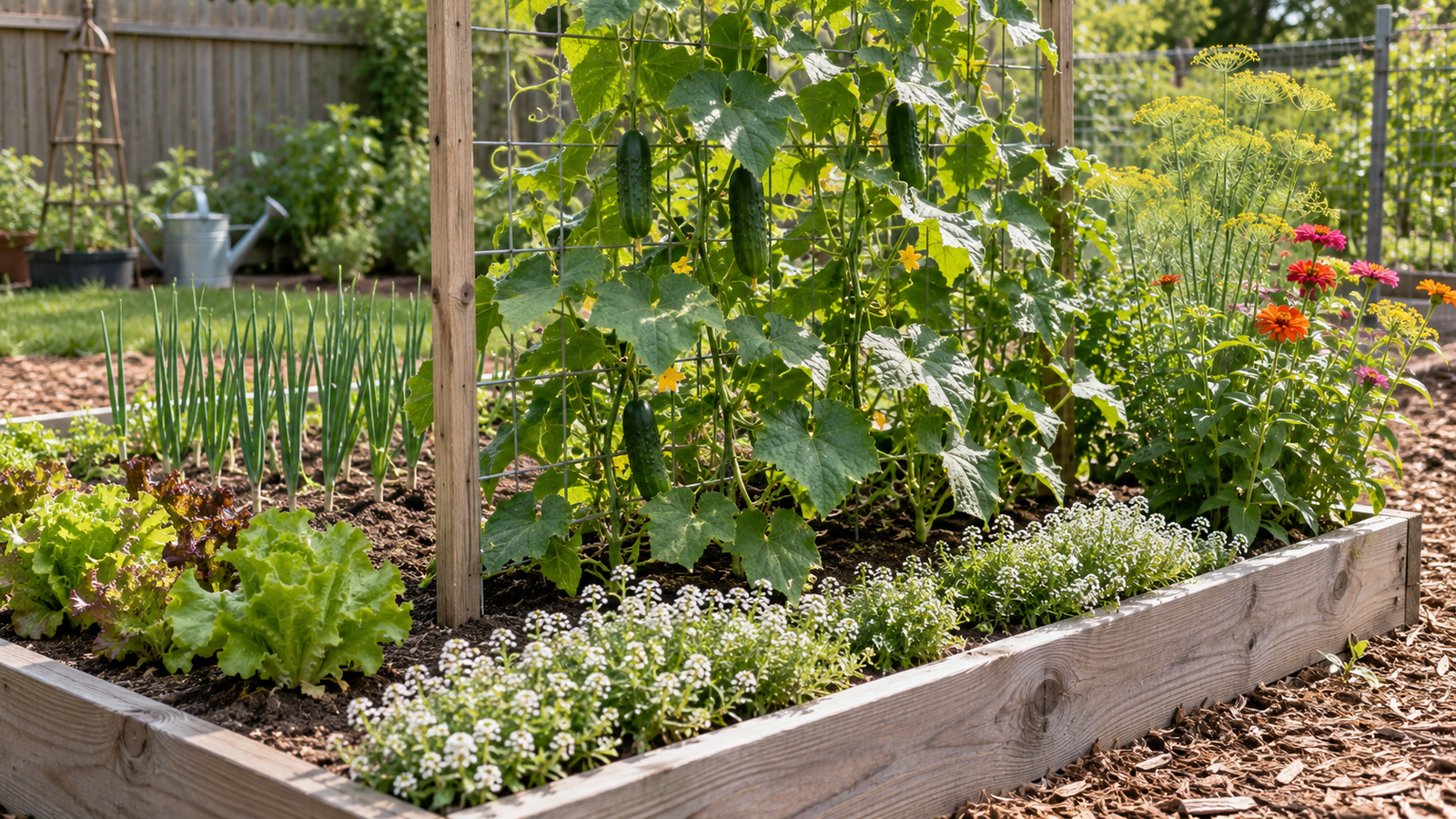
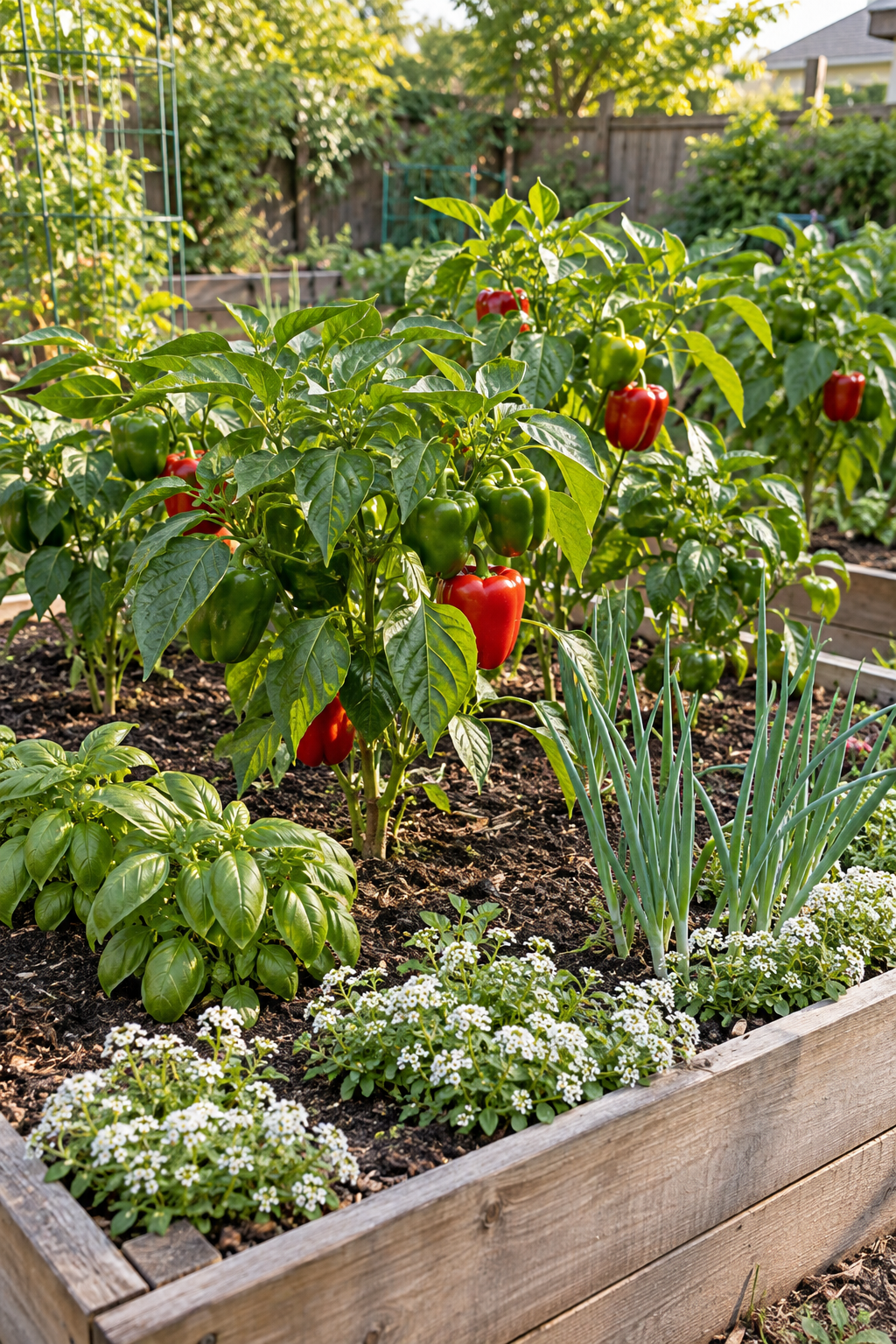
For a simple raised bed, I would start with peppers as the main crop, a few basil plants between widely spaced peppers, scallions near the front, and sweet alyssum along one edge.
1. Basil
Basil is probably the most frequently recommended companion for peppers.
The common explanation is that its scent repels aphids, thrips, and other pests. The real evidence is more complicated, but basil is still a useful plant to consider.
Researchers have studied sweet peppers intercropped with basil, onions, lettuce, parsley, and French beans. These trials look at more than yield. They also measure pest pressure, beneficial insects, fruit damage, soil resources, and the economic value of harvesting two crops from the same area.
Other greenhouse research tested basil, rosemary, and lavender beside sweet pepper plants to see how neighboring aromatic plants affected green peach aphids. The results showed that the identity and arrangement of the companion plants mattered. Simply placing one fragrant herb near a pepper did not guarantee pest control.
That is the lesson I would use in a home garden.
Basil can add plant diversity, cover a little open soil, produce a second edible crop, and flower for beneficial insects if you allow some stems to bloom. It should not be treated as a replacement for checking the peppers regularly.
How to Plant Basil with Peppers
Use a small number of basil plants and keep them far enough from the pepper stems that both crops receive sunlight and air.
Do not create a solid carpet of basil. A field trial with hot peppers found that dense basil intercropping could reduce pepper yield even when the combined system remained economically useful. More companion plants are not always better.
2. Onions and Scallions
Onions are practical pepper companions because they grow upright, occupy relatively little space above the soil, and can be placed near the edge of a bed.
There is also direct research on pepper and onion intercropping.
Field studies have found that some onion-pepper spacing arrangements used land more efficiently than growing the crops separately. Research on chili peppers intercropped with onion or garlic has also reported lower pest infestation in some systems and higher green chili yield than the pepper-only plots.
Those results do not mean that one onion will protect an entire pepper plant. They show that the combination can work when spacing, irrigation, fertility, and planting density are managed carefully.
How to Use Onions in a Pepper Bed
Plant scallions or small onions along the sunny front edge of the bed instead of directly against the pepper stems.
Remember that onions also need light. If mature pepper plants completely shade them, bulb development may be disappointing. Scallions are often the easier choice because you can harvest them before the pepper canopy becomes large.
3. Lettuce
Lettuce works best as a seasonal companion rather than a permanent neighbor.
It grows quickly in cool spring weather, while peppers are still small and waiting for warmer conditions. This lets you use open soil early in the season and harvest the lettuce before the peppers need the full bed.
Lettuce can also shade part of the soil surface, which may slow moisture loss and reduce some weed growth. That benefit only lasts while the lettuce remains healthy and uncrowded.
The Timing Matters
Do not keep planting more lettuce under mature peppers just because the spring combination worked well.
Hot weather can make lettuce bitter or cause it to bolt. Dense lower growth can also make it harder to water the peppers and inspect the base of each plant.
Use lettuce early, harvest it on time, and then leave the peppers with more open space for summer.
4. Sweet Alyssum
Sweet alyssum is one of the easiest flowers to fit around a vegetable bed.
It stays low, flowers heavily, and provides accessible nectar and pollen for small beneficial insects. Hoverflies are especially useful in gardens with aphids because many hoverfly larvae feed on aphids.
Flowering habitat does not guarantee that predators will remove every pest. It gives those insects a better reason to remain in or near the garden.
The Xerces Society has documented sweet alyssum in insectary plantings designed to support hoverflies and other natural enemies. That is a more realistic reason to use it than saying that the flower directly repels aphids.
Where to Plant Sweet Alyssum
Put it along the front or side edge of the pepper bed.
Leave an open circle around each pepper stem so you can water, mulch, and inspect the plant easily. Trim the alyssum if it begins to cover the pepper root zone too heavily.
5. Cilantro
Cilantro is most useful after it begins to flower.
The plant produces clusters of small, shallow flowers that are easy for hoverflies, parasitoid wasps, and other small beneficial insects to use. Penn State Extension includes cilantro among the herbs that can encourage aphid-eating insects in the garden.
This makes cilantro a good bridge between an edible herb and an insectary plant.
Let Some Cilantro Bolt
Gardeners often remove cilantro when warm weather causes it to bolt. Near peppers, I would allow a few plants to flower.
Keep them near the edge of the bed rather than directly beneath the peppers. Cilantro can become tall and loose once it flowers, so it needs enough room to avoid leaning into the pepper canopy.
6. French Marigolds
Marigolds are useful flowers, but their benefits are often exaggerated.
One marigold does not create an invisible barrier around a pepper plant. It will not repel every aphid, whitefly, thrips, or beetle that enters the garden.
There is still good reason to grow them.
A study of organic sweet pepper compared pepper monoculture with peppers intercropped with basil or marigold. The researchers examined the parasitoid insects attracted to the different systems. That kind of work supports the broader idea that flowering diversity can affect the beneficial-insect community around a crop.
Some French marigold cultivars can also help suppress certain root-knot nematodes, but that benefit depends on the marigold species, cultivar, nematode species, planting density, and length of time the roots grow in the soil. It is not a universal effect created by adding one flower beside a pepper.
How I Would Use Marigolds
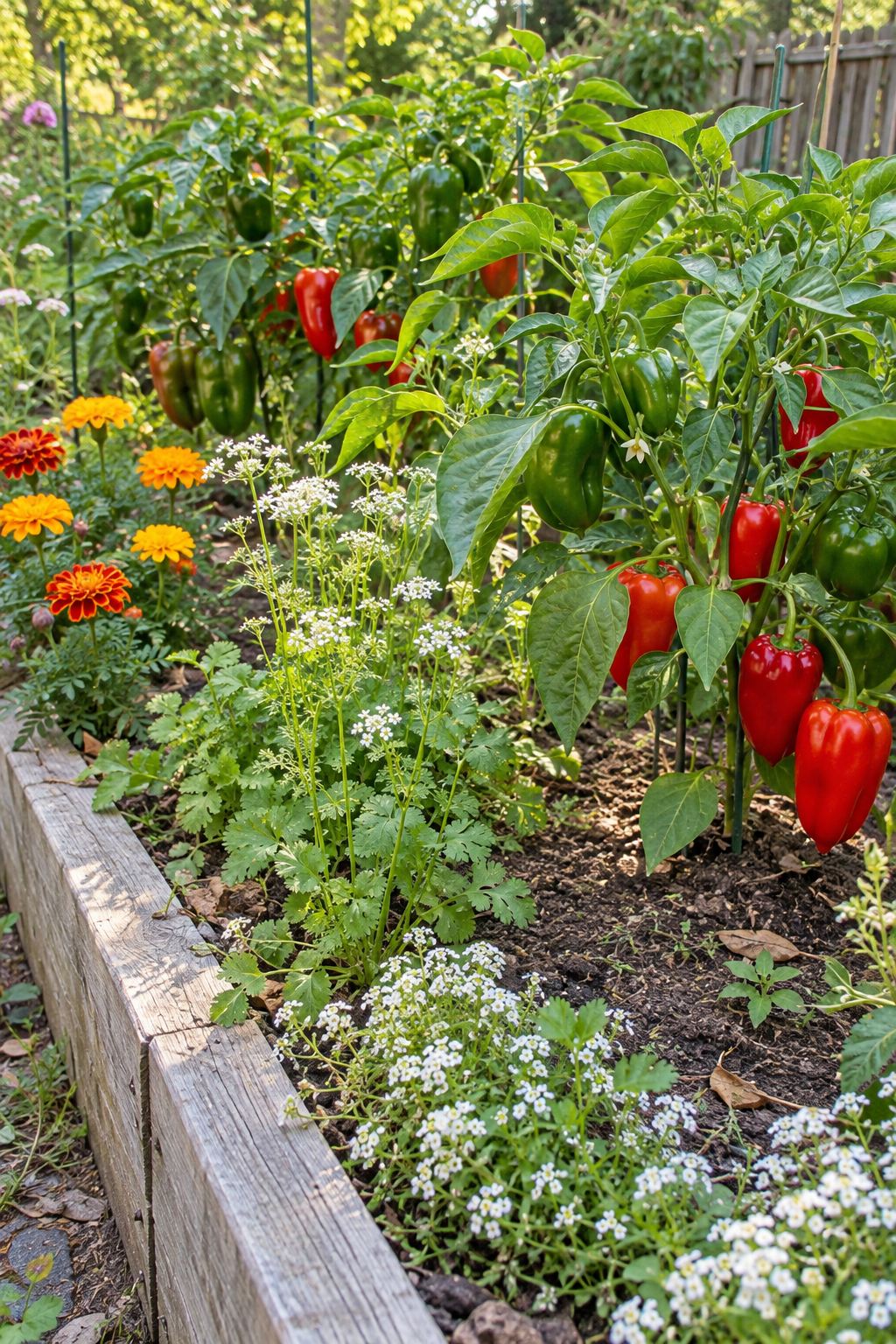
Place a few compact French marigolds at the corners or along the outer edge of the bed.
They add long-lasting flowers without filling the main pepper row. Choose compact plants and maintain normal pepper spacing.
7. Parsley
Parsley is another herb that can fit into a pepper system without becoming a large vine or shrub.
It was included in the European greenhouse experiments comparing sweet pepper grown alone with pepper intercropped with basil, onion, lettuce, parsley, or French bean.
Like cilantro, parsley becomes more valuable to beneficial insects when it flowers. The second-year flower stalks produce many small blooms that can provide food for parasitoid wasps, hoverflies, and other insects.
There is a tradeoff: flowering parsley takes up more space than young parsley grown for leaves.
My Practical Recommendation
Grow one or two parsley plants near the bed, not a dense row between every pepper.
Harvest the leaves during the first season. If you want the flowers, leave one healthy plant through winter where the climate allows it and give the flower stalk room the following year.
8. Sunflowers
Sunflowers have some of the strongest pepper-specific evidence in this list, but placement is critical.
University of Florida research found that sunflowers around pepper fields could support minute pirate bugs, also called Orius. These small predators feed on thrips, including species that damage pepper flowers and fruit.
Florida Extension recommends thinking of sunflower as a perimeter or border plant. That is very different from putting a giant sunflower in the center of a small pepper bed.
Research results have not been identical in every trial. One push-pull experiment found that sunflower companion plants did not add a measurable benefit when combined with reflective mulch and kaolin. This is a useful reminder that companion planting is not automatic.
Where to Put Sunflowers
Plant them on the north side of the bed in the Northern Hemisphere, or wherever their mature height will not block important sunlight.
Use a separate border if possible. Sunflowers have large root systems and can compete strongly when squeezed into a small raised bed.
9. Buckwheat
Buckwheat is better for a larger garden than a small container.
It grows quickly and can begin flowering in a relatively short window. University of Minnesota Extension notes that flowering buckwheat can attract beneficial insects, and the flowers provide pollen and nectar.
This makes it useful as a short insectary strip near peppers or as a cover crop in an area that will be replanted later.
Do Not Let It Take Over the Pepper Row
Buckwheat can grow rapidly and may reseed if it is left too long.
Sow a small patch outside the main pepper bed, let it flower, and cut it before mature seed becomes a problem. It is a nearby habitat plant, not something I would pack around each pepper stem.
What About Tomatoes and Eggplants?
Peppers, tomatoes, and eggplants can grow near one another. They need similar warm conditions, and there is no mysterious chemical incompatibility that prevents the combination.
The problem is that they all belong to the nightshade family.
They can share pests and diseases, and filling the same bed with nightshades every year makes crop rotation more difficult. If one plant develops a serious disease, closely packed related crops may also be harder to protect.
If you combine them, provide generous spacing and avoid repeating the same crop-family arrangement in the same soil season after season.
For planning the tomato part of the garden, see our guides to the best companion plants for tomatoes and what not to plant with tomatoes.
Do Peppers Need Companion Flowers for Pollination?
Pepper flowers can pollinate themselves, so you do not need a separate pollinator plant to produce peppers.
Insects and movement can still help transfer pollen within the flower, and a garden with varied blooms supports a healthier insect community. The main reason to add flowers near peppers is habitat for beneficial insects, not because a pepper is completely unable to set fruit without bees.
The Biggest Companion Planting Mistake
The biggest mistake is crowding.
Young pepper transplants leave a lot of bare soil in spring. It is tempting to fill every open area with herbs, flowers, onions, lettuce, and groundcovers.
By midsummer, the peppers are wider, the basil is flowering, the marigolds have doubled in size, and the bed can become difficult to water or inspect.
Crowding can:
- Reduce airflow around pepper leaves
- Make pest problems harder to notice
- Increase competition for water
- Shade young pepper plants
- Make harvesting more difficult
- Keep foliage wet for longer after rain or irrigation
Plan for the mature size of every plant, not the size of the transplant on planting day.
A Simple Pepper Companion Planting Plan
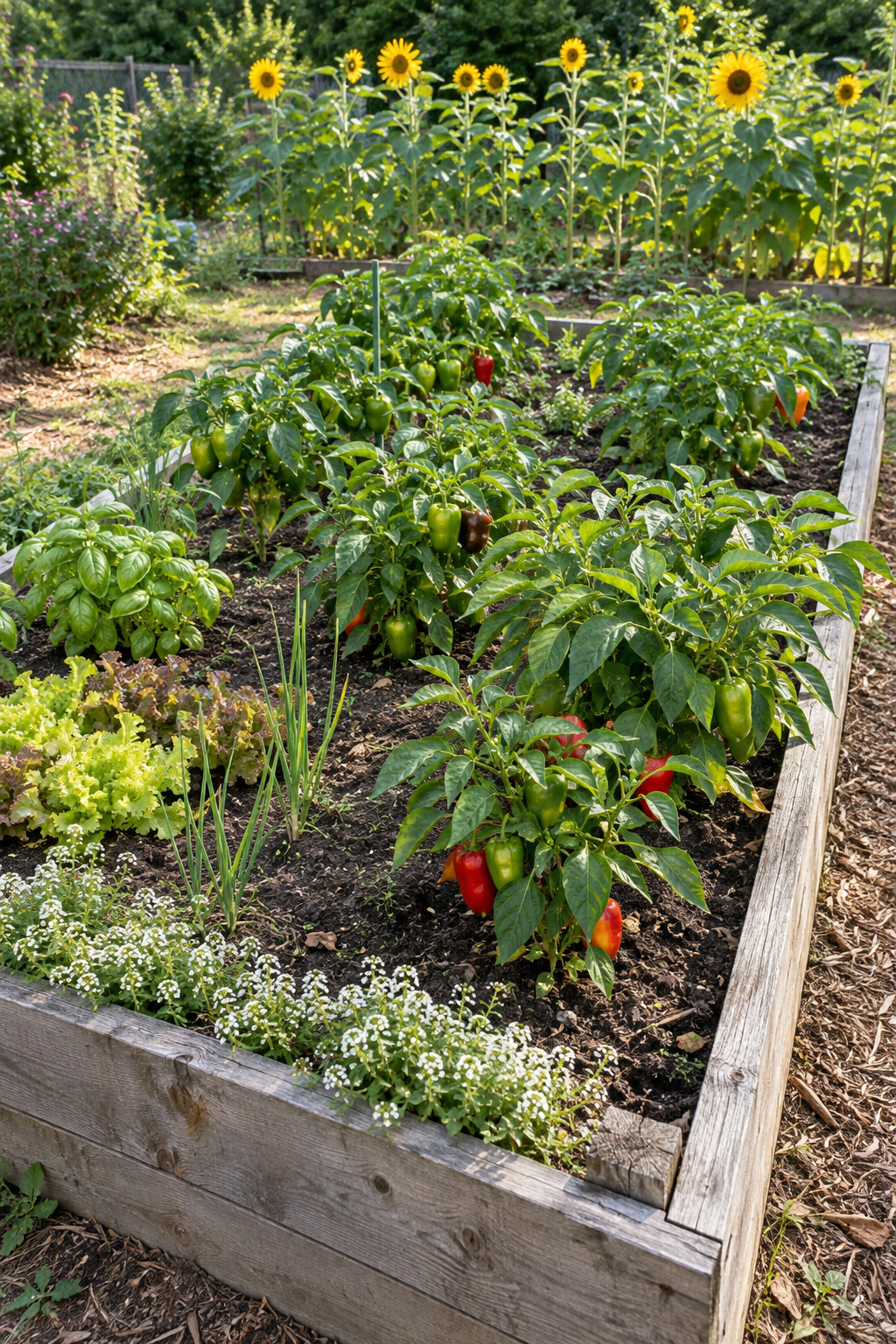
For a practical home garden, I would use this layout:
- Plant peppers as the main crop with the spacing recommended for the variety.
- Add one compact basil plant between widely spaced peppers, not between every plant.
- Grow scallions along the sunny front edge.
- Use lettuce in early spring and harvest it before summer crowding begins.
- Place sweet alyssum or a few French marigolds around the outer edge.
- Let one cilantro plant flower near the bed.
- Put sunflowers or buckwheat in a separate border where they cannot shade the peppers.
This gives you food, flowers, and useful insect habitat while keeping the main pepper row open and manageable.
If you are planning several vegetable beds, compare this layout with our guide to the best companion plants for cucumbers. Cucumbers need a different structure because their vines and trellises change how nearby plants use the space.
Frequently Asked Questions
What Is the Best Companion Plant for Peppers?
For a small raised bed, basil is one of the easiest edible companions, while sweet alyssum is one of the easiest flowering companions. Sunflowers have valuable pepper-specific research behind them, but they work better as a border than inside a small bed.
Can Basil and Peppers Grow Together?
Yes. They enjoy similar warm growing conditions. Use moderate spacing because dense basil can compete with peppers and may reduce pepper yield.
Can I Plant Marigolds with Peppers?
Yes. Compact French marigolds can add flowers and insect diversity around a pepper bed. Do not expect one plant to repel every pest, and do not crowd the pepper roots.
Can Onions Grow Next to Peppers?
Yes. Onion-pepper intercropping has been tested in field research, and some arrangements used garden space efficiently. Scallions are especially easy to fit along a bed edge.
Can Tomatoes and Peppers Share a Bed?
They can, but both are nightshades and may share pests and diseases. Give them enough space and rotate the crop family to a different bed in future seasons when possible.
Do Companion Plants Keep Aphids Away from Peppers?
No companion plant guarantees an aphid-free pepper crop. Flowering plants such as sweet alyssum and cilantro can support hoverflies, parasitoid wasps, and other natural enemies. Regular inspection is still necessary.
Can I Put All These Companions in One Bed?
No. Choose two or three that solve a specific problem. A crowded companion garden can create more competition and maintenance work than a simple pepper bed.
Final Thoughts
The best pepper companions are not magical pest repellents.
They are plants that fit the available space and add something useful.
Basil, onions, lettuce, and parsley can provide a second edible harvest. Sweet alyssum, cilantro, and marigolds add flowers for beneficial insects. Sunflowers can support important thrips predators when they are used as a well-placed border. Buckwheat can create a quick flowering strip in a larger garden.
Start with healthy soil, full sun, steady water, and correct pepper spacing. Then add only the companions that have a clear purpose.
That approach is simpler, more reliable, and much easier to maintain than trying to follow a long chart of plant friendships.
References
- University of Florida IFAS Extension: Intercropping, Crop Diversity and Pest Management
- USDA Agricultural Research Service: Intercropping Sunflower Varieties with Bell Pepper
- Evaluation of a Push-Pull Strategy for Thrips Management in Bell Peppers
- Experimental Dataset on Sweet Pepper Intercropped with Basil, Onion, Lettuce, Parsley, or French Bean
- Influence of Neighboring Companion Plants on Aphids on Sweet Pepper
- Parasitoid Diversity in Organic Sweet Pepper Associated with Basil and Marigold
- Yield of Onion-Pepper Intercropping in the Sudan Savanna
- Penn State Extension: Herbs Make Good Plant Partners and Companions
- University of Minnesota Extension: Cover Crop Selection for Vegetable Growers
- Xerces Society: Insectary Plantings and Conservation Biological Control