Tomatoes are easy to pair with many herbs, flowers, and vegetables, but that does not mean every plant belongs in the same bed.
Some neighbors can create a real problem because they share diseases or pests with tomatoes. Others take up too much space, cast too much shade, or compete heavily for water and nutrients. A few plants can even release natural chemicals that tomatoes do not tolerate well.
At the same time, many popular lists of bad tomato companions go too far.
You will often see cabbage, fennel, corn, potatoes, peppers, eggplant, and several other crops described as plants that should never be grown near tomatoes. The problem is that the evidence is not equally strong for all of them.
That is why I prefer to separate proven risks from garden folklore.
If you are also deciding what you should grow nearby, read our guide to the best companion plants for tomatoes. It covers basil, French marigolds, sweet alyssum, cilantro, thyme, lettuce, hairy vetch, and clover.
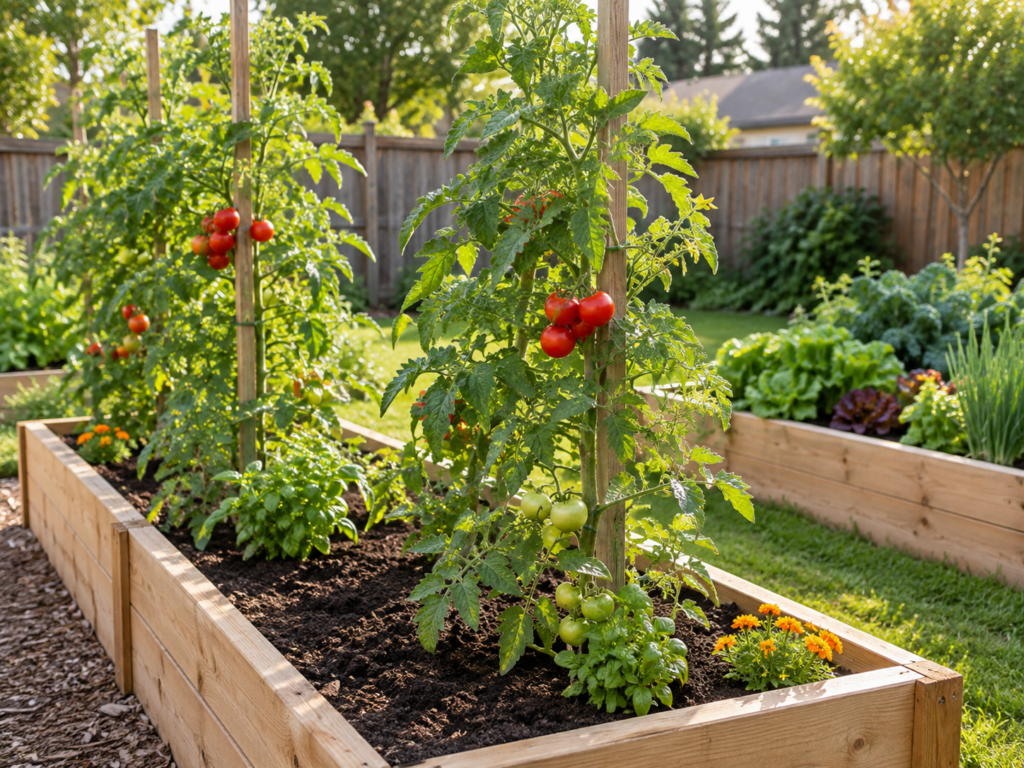
The Short Answer
The plants I am most careful about around tomatoes are:
| Plant or plant group | Main concern | How careful I would be |
|---|---|---|
| Black walnut | Juglone toxicity | Keep tomatoes away |
| Potatoes | Shared diseases and difficult crop rotation | Avoid in the same bed |
| Eggplant | Shared diseases and insect pests | Use caution |
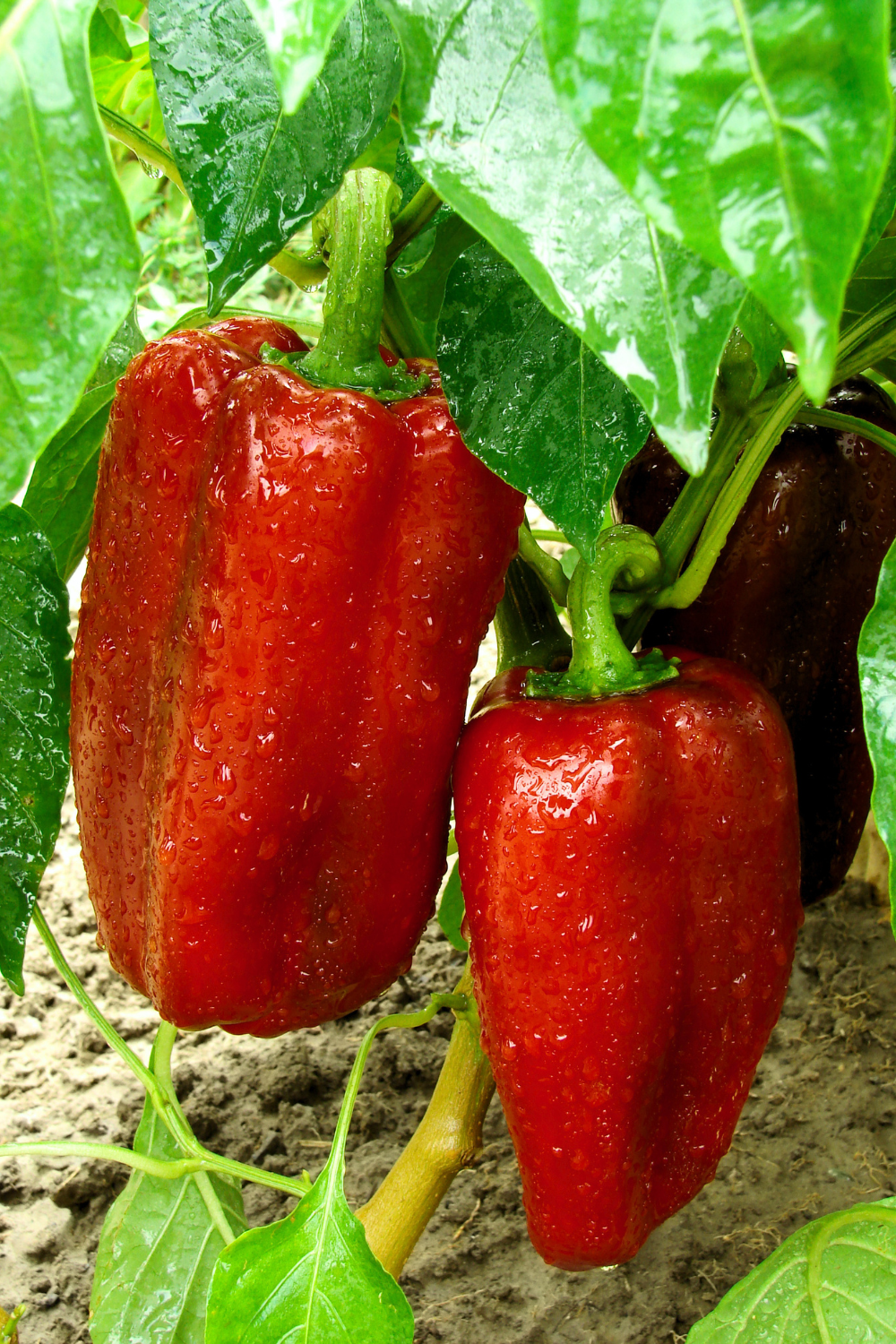
| Peppers | Shared diseases and insect pests | Use caution |
| Tomatillos | Same plant family and similar disease concerns | Use caution |
| Sweet corn | Shared tomato fruitworm and possible shading | Situational |
| Large vining squash and pumpkins | Crowding, shade, and competition | Avoid in tight spaces |
This does not mean every one of these plants will damage a tomato simply because it is nearby.
The reason matters.
A black walnut is a much more serious concern than a pepper plant. A pepper and a tomato can grow side by side in a healthy garden, but putting many related crops together can make disease management and crop rotation harder.
That distinction is important.
Before You Trust a Companion Planting Chart
Companion planting can be useful, but many charts mix research, personal experience, old gardening traditions, and claims that have been copied for years.
University of Minnesota Extension makes the same point. Some companion planting combinations have research behind them, while many others do not.
Our article on companion planting myths and facts goes deeper into that problem.
When I decide whether two plants belong together, I ask simple questions.
- Do they share an important disease?
- Do they attract the same serious pest?
- Will one shade the other?
- Will their roots compete heavily in a small bed?
- Does one plant release a compound that can harm the other?
- Will growing them together make crop rotation harder next year?
Those questions are much more useful than calling two plants friends or enemies.
1. Black Walnut
Black walnut is the clearest plant on this list.
If you have a black walnut tree near your vegetable garden, I would not plant tomatoes within its active root zone.
Black walnut produces a natural compound called juglone.
Penn State Extension explains that juglone is found throughout the tree, with high concentrations in roots, buds, leaves, stems, and nut hulls. Tomatoes are among the vegetables that are especially sensitive to it.
A tomato affected by juglone may develop:
- Yellow leaves
- Sudden wilting
- Weak growth
- Stunted plants
- Plant death in severe cases
The frustrating part is that these symptoms can look like drought stress.
You may water the tomato and see little improvement because lack of water is not the real problem.
How Far Should Tomatoes Be from a Black Walnut?
There is no perfect distance that works for every tree because black walnut roots can extend far beyond the trunk.
Purdue Extension has recommended keeping tomatoes and other related vegetables about 50 to 100 feet away from black walnut trees when possible.
Penn State also notes that juglone is most concentrated near roots and that highly sensitive plants can remain affected even after a walnut tree has been removed because old roots may continue to break down in the soil.
If space is limited, a raised bed can sometimes help, but it must be built in a way that prevents walnut roots from growing into the bed.
What About Butternut and Other Walnuts?
Butternut also produces juglone.
English walnut and some hickories produce it too, although Penn State reports that the amount is generally lower than in black walnut.
Black walnut remains the tree I would be most concerned about around tomatoes.
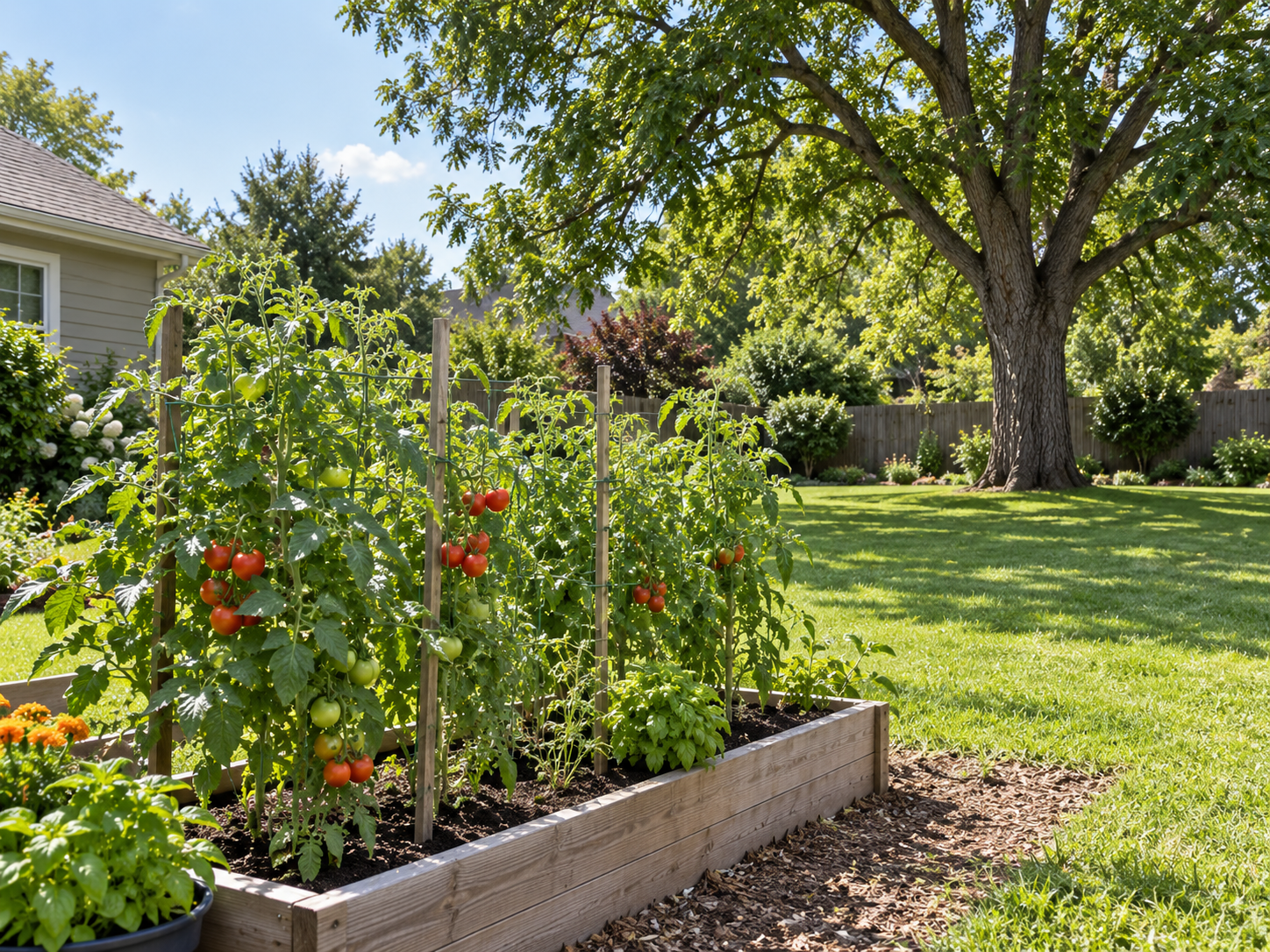
2. Potatoes
Potatoes and tomatoes are close relatives.
Both belong to the same plant family, and that means they can share several serious diseases.
One of the biggest concerns is late blight.
The organism that causes late blight, Phytophthora infestans, can infect both tomatoes and potatoes. Penn State Extension describes late blight as a disease of both crops, and University of Minnesota Extension recommends avoiding tomatoes in ground where potatoes and other related crops have been grown during the previous three or four years.
Early blight can also affect tomatoes and potatoes.
That is why I do not like putting potatoes and tomatoes together in the same small bed.
The Problem Is Bigger Than One Season
The main issue is not that potato roots poison tomatoes.
They do not.
The problem is that growing the two crops together makes it harder to separate plant families when you rotate crops.
Crop rotation helps reduce the buildup of diseases that survive on crop debris or in soil.
Penn State recommends not planting tomatoes, potatoes, peppers, or eggplant in the same area more than once in three years.
If your raised bed contains both tomatoes and potatoes this year, the whole bed has effectively been used for that same plant family.
That gives you fewer clean places to move tomatoes next season.
Harvesting Potatoes Can Also Disturb Tomato Roots
There is another practical problem.
Potatoes must be dug from the soil.
If they are growing close to mature tomatoes, harvesting them can disturb tomato roots just when the tomato plants are carrying fruit.
For that reason alone, I prefer giving potatoes their own bed.
3. Eggplant
Eggplant is often listed as a bad tomato companion.
I would use more careful wording.
Tomatoes and eggplant can physically grow near each other. There is no good evidence that one releases something that poisons the other.
The concern is that they are closely related and share several pests and diseases.
Penn State lists eggplant as another host of early blight, and University of Minnesota recommends keeping tomatoes out of areas where eggplant has grown during the previous three or four years when managing diseases such as late blight and bacterial canker.
Eggplant and tomatoes can also both attract pests such as Colorado potato beetles and hornworms.
When I Would Separate Them
I would place eggplant in another bed if:
- Your tomatoes have had disease problems in recent years
- Colorado potato beetles are common in your area
- You have enough garden space to rotate plant families properly
- Your bed is already crowded
If your garden is healthy and space is limited, one eggplant near tomatoes is not automatically a mistake.
The key is understanding that you are grouping plants with many of the same weaknesses.
4. Peppers
Peppers are another case where internet advice often becomes too absolute.
Tomatoes and peppers can grow beside each other.
They like similar summer weather, similar sunlight, and regular watering.
The concern is disease management.
Peppers belong to the same plant family as tomatoes, potatoes, and eggplant. Extension crop rotation guidance often groups all of these vegetables together.
University of Minnesota Extension advises gardeners to avoid planting tomatoes where tomatoes, potatoes, peppers, or eggplants have been grown during the previous three or four years when managing late blight.
Penn State gives similar advice for tomato disease prevention.
Are Peppers Bad for Tomatoes?
Not in the way black walnut is bad for tomatoes.
A pepper plant will not normally suppress a tomato simply because the two roots are near each other.
The problem appears when gardeners fill the same bed with tomatoes and peppers every year.
That creates poor rotation and gives several shared diseases a chance to remain in the same growing area.
So I do not consider peppers forbidden.
I consider them a crop that needs to be planned with tomatoes rather than planted without thinking about next season.
5. Tomatillos
Tomatillos are another tomato relative.
They belong to the same broad plant family and are usually grouped with tomatoes, peppers, potatoes, and eggplant when planning crop rotation.
That makes them less useful as a break crop between tomato plantings.
Tomatillos also become much larger than many beginners expect.
University of Minnesota Extension recommends allowing as much as three feet of space for tomatillo plants because of their bushy growth.
Why I Would Not Squeeze Them Between Tomatoes
A mature tomato already needs space for:
- Its root system
- A cage or stake
- Air movement
- Harvest access
- Sunlight on the leaves
Adding a large tomatillo plant between two tomatoes can quickly turn a tidy spring bed into a crowded summer bed.
If you want both crops, I would give each one enough room rather than treating the tomatillo like a small companion herb.
6. Sweet Corn
Corn is one of the more interesting plants on this list because the answer is not simple.
Sweet corn and tomatoes share an important caterpillar pest.
The corn earworm and tomato fruitworm are the same insect species, Helicoverpa zea.
On corn, the caterpillar feeds in the ears.
On tomatoes, it can bore into the fruit.
Purdue Extension notes that female moths prefer to lay eggs on corn, especially sweet corn, although they also lay eggs on tomato plants.
This might sound like a reason to keep corn far away from tomatoes.
But research has also explored corn as a trap crop for this pest in tomato production.
That means corn is not automatically a bad companion.
It depends on how it is being used.
Why I Still Avoid Corn in a Small Tomato Bed
For a beginner, I would not mix tall sweet corn directly among tomato plants.
The main reasons are practical.
Corn can shade tomatoes if it is planted on the wrong side of the bed.
Tomatoes need strong sunlight to grow and ripen fruit well.
Corn also needs enough plants growing together for good pollination, so a few random corn stalks between tomatoes are not an ideal way to grow corn anyway.
If you want both crops, place corn in its own block and position it where it will not cast long shadows over the tomatoes.
If tomato fruitworm is a serious local pest, monitor both crops carefully.
7. Large Vining Squash and Pumpkins
Pumpkins and large winter squash are not chemically incompatible with tomatoes.
The problem is size.
A vigorous squash vine can travel several feet across a garden bed.
Penn State recommends generous spacing for vining winter squash, with several feet between plants and even more space between rows.
University of Minnesota Extension also notes that plants placed too close together compete for light and nutrients.
A tomato bed can become crowded very quickly when squash vines start running through it.
What Can Go Wrong?
Large vines can:
- Shade lower tomato leaves
- Make harvesting difficult
- Reduce air movement
- Compete for water in a small bed
- Cover paths and irrigation lines
- Make it harder to inspect tomato plants for pests and disease
If you have a large garden, tomatoes and squash can grow in the same general area with enough space.
In a small raised bed, I would separate them.
Bush zucchini is easier to manage than a large pumpkin or winter squash vine, but it still needs more room than many gardeners expect.
The Bigger Issue: Do Not Crowd Tomatoes
A lot of supposed companion planting problems are really spacing problems.
Tomatoes grow fast once summer heat arrives.
A bed that looks almost empty in May can be packed with leaves by July.
Good air circulation matters because many tomato leaf diseases develop more easily when foliage stays wet.
University of Minnesota Extension recommends spacing tomatoes so air can move between plants and staking or caging them to help leaves dry.
This is why I would rather grow three well spaced tomatoes than squeeze six tomatoes and ten companion plants into the same bed.
More plants do not always mean a better garden.
What About Cabbage, Broccoli, Kale, and Other Brassicas?
This is where I disagree with many companion planting lists.
Cabbage, broccoli, cauliflower, kale, and Brussels sprouts are frequently described as terrible tomato companions.
You may read that they stunt tomatoes or prevent them from growing.
I would not make that claim without better evidence.
These vegetables can certainly compete with tomatoes if planted too closely. Large cabbage plants take up a lot of room, and both crops need fertile soil.
But ordinary competition is different from a special harmful relationship.
There is not strong evidence that a cabbage plant automatically damages a tomato simply because the two are neighbors.
So if you see brassicas listed as a strict tomato enemy on a companion planting chart, treat that claim with caution.
I would separate large crops when space is tight, but I would not tell a gardener that tomatoes and cabbage can never share the same garden.
What About Fennel?
Fennel appears on many lists of plants that should never be grown near anything.
Again, I would be cautious with that advice.
Fennel produces natural compounds, and fennel essential oil has shown plant growth inhibiting activity in laboratory research at certain concentrations.
But that is not the same thing as proving that a normal fennel plant growing in garden soil will damage a nearby tomato.
Penn State Extension actually recommends fennel flowers as a way to attract several beneficial insects, including lacewings, lady beetles, parasitic wasps, spiders, and hoverflies.
That does not prove fennel is an ideal tomato companion.
It does show why the simple statement that fennel is bad for every neighboring plant is too broad.
If I grow fennel, I usually give it its own space because it becomes a large plant and because I want easy access to the flowers and stems.
I do not separate it from tomatoes because I believe it will poison them.
What About Dill?
Dill is another herb that often appears on both good and bad companion lists.
Some gardening charts claim young dill helps tomatoes but mature dill harms them.
I have not found strong evidence supporting that simple rule.
Penn State Extension lists dill among flowering herbs that can attract beneficial insects that attack caterpillar pests, including tomato hornworm and tomato fruitworm.
So I would not treat mature dill as a proven tomato enemy.
If dill is crowding a tomato, cut it back or move it because of space, not because of an unsupported claim.
What Should You Plant with Tomatoes Instead?
If your goal is to fill open spaces around tomatoes, choose plants that have a clear purpose.
Good options include:
- Basil
- French marigolds
- Sweet alyssum
- Cilantro
- Thyme
- Lettuce
You can read the full reasoning and research in our guide to plants that grow well with tomatoes.
For a wider organic garden, our guide to companion planting in an organic garden explains how mixed planting can fit into a larger garden plan.
And if pests are your main concern, see our guide to companion plants for natural pest control.
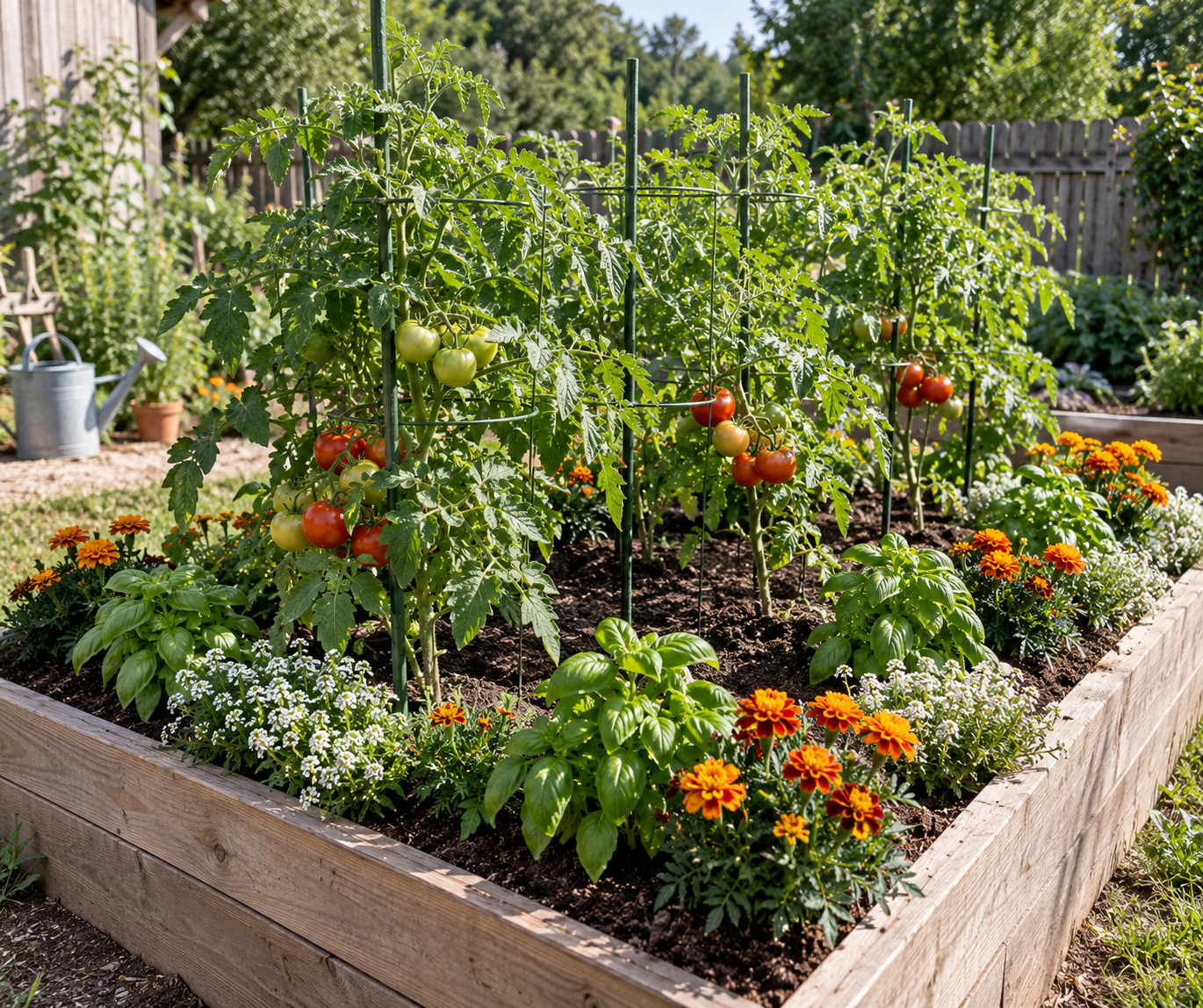
Crop Rotation Matters More Than Most Companion Charts
If there is one idea I want a beginner to remember, it is this:
Do not only think about what is beside your tomato this year.
Think about what grew in that soil last year and what you will plant there next year.
Tomatoes, potatoes, peppers, eggplant, and tomatillos are closely related.
When the same plant family stays in the same bed year after year, some diseases and pests get an easier chance to build up.
Penn State Extension recommends rotating tomatoes and related crops rather than planting them repeatedly in the same area.
University of Minnesota gives similar advice and commonly recommends a three or four year break for related crops when managing several tomato diseases.
For a small backyard garden, perfect rotation is not always possible.
Do the best you can.
Even moving tomatoes between two or three beds is better than planting them in exactly the same soil every year without considering disease history.
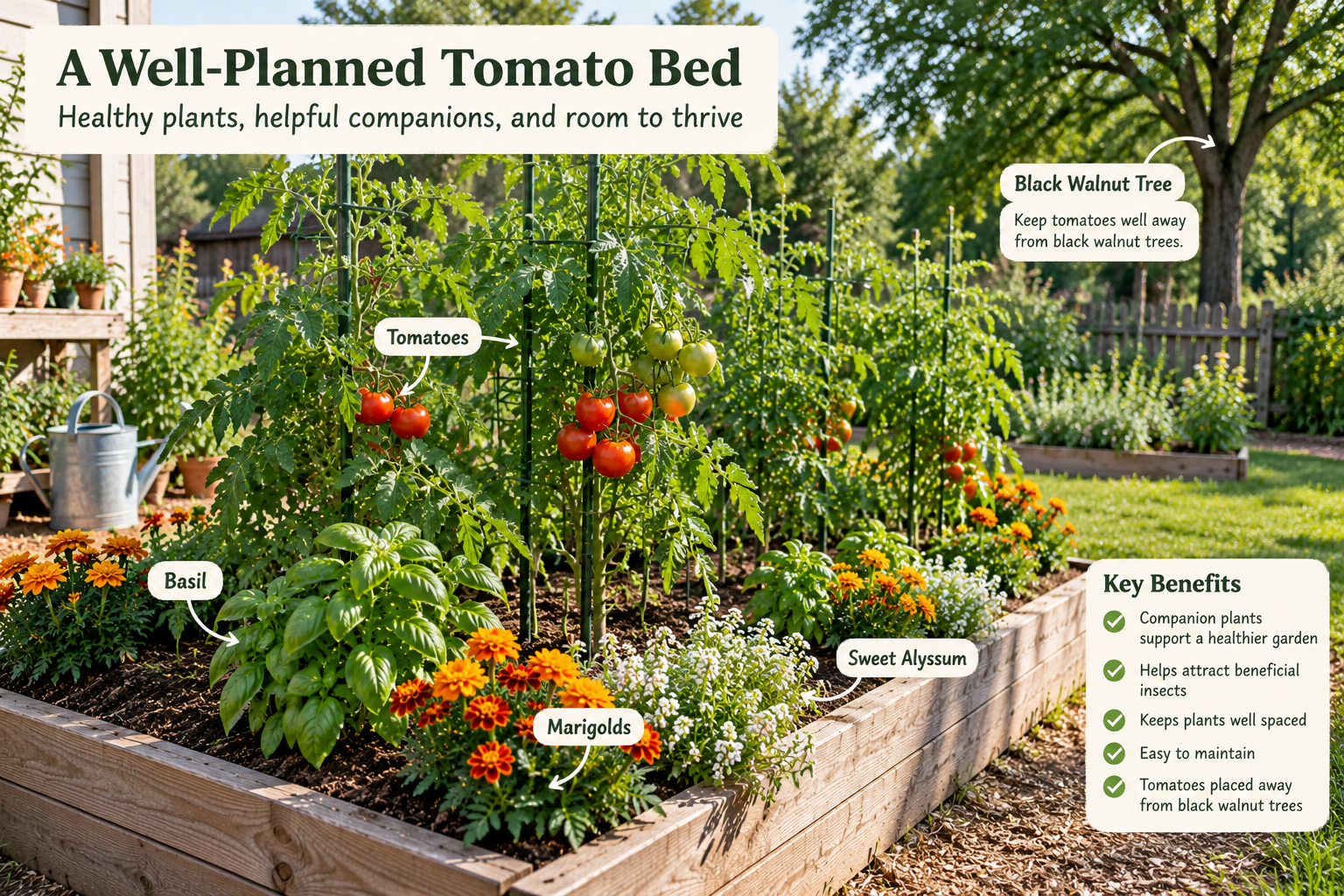
A Simple Tomato Bed Plan
For a beginner, I would keep the design simple.
Place tomatoes where they receive full sun.
Give each plant enough room for its mature size and support system.
Use smaller companions such as basil or marigolds in open areas.
Put low flowers such as sweet alyssum near the bed edge.
Keep potatoes in another bed.
Keep large squash vines somewhere they can spread without covering the tomatoes.
Put tall crops such as corn where they will not shade the tomato bed.
And if there is a black walnut nearby, choose a different location entirely.
That is a much safer plan than trying to fit every vegetable into one crowded raised bed.
Frequently Asked Questions
Can I Plant Tomatoes and Potatoes Together?
They can grow at the same time, but I would not put them in the same small bed.
Tomatoes and potatoes share important diseases, including late blight and early blight. Growing them together also makes crop rotation more difficult.
Can Tomatoes and Peppers Grow Together?
Yes.
Peppers are not toxic to tomatoes.
The main concern is that peppers and tomatoes are related and share several diseases. If you grow them together, treat the whole bed as one plant family when planning crop rotation.
Can Tomatoes and Eggplant Grow Together?
Yes, but I prefer separating them when disease or Colorado potato beetle pressure is common.
Both crops belong to the same plant family and share several pests and diseases.
Can Tomatoes Grow Near Corn?
Yes, if there is enough space and the corn does not shade them.
Corn earworm and tomato fruitworm are the same insect species, so monitor both crops if that pest is common in your area.
Can Tomatoes Grow Near Cabbage?
Yes.
I have not found strong evidence that cabbage automatically harms tomatoes.
The main concern is space and competition when both crops become large.
Should I Keep Fennel Away from Tomatoes?
I would give fennel its own space because it becomes a large plant, but the common claim that ordinary fennel plants poison nearby tomatoes is not well established.
Flowering fennel can also attract beneficial insects.
How Far Should Tomatoes Be from a Black Walnut?
Purdue Extension has advised keeping tomatoes and other sensitive related crops about 50 to 100 feet from black walnut trees when possible.
Actual risk depends on root spread, soil conditions, tree size, and whether old walnut roots remain in the soil.
What Is the Worst Plant to Grow Near Tomatoes?
Black walnut is the clearest answer because tomatoes are highly sensitive to juglone.
Potatoes are another plant I would keep out of the same tomato bed because they share important diseases and complicate crop rotation.
Do Tomatoes Need Companion Plants?
No.
A tomato can grow perfectly well without companion plants.
Good soil, adequate sun, steady watering, support, airflow, and basic pest monitoring matter more.
Companion plants are useful when they solve a real problem or make better use of garden space.
Final Thoughts
The phrase “bad companion plant” can make gardening sound more mysterious than it really is.
Most plants do not have secret battles underground.
The strongest reasons to separate plants are usually practical and easy to understand.
Black walnut can expose tomatoes to juglone.
Potatoes and other close tomato relatives can complicate disease management and crop rotation.
Corn can share a fruit pest and create shade if badly placed.
Large squash vines can simply take over the bed.
Those are useful reasons.
Claims that cabbage, fennel, dill, or another ordinary vegetable will automatically ruin your tomatoes deserve more skepticism.
Plan around plant size, sunlight, airflow, pests, diseases, and crop rotation first.
Then use companion planting as an extra tool rather than a set of rigid rules.
References
- University of Minnesota Extension. Companion planting in home gardens.
https://extension.umn.edu/garden-and-home/yard-and-garden/gardening-in-minnesota/companion-planting-in-home-gardens - Penn State Extension. Tomato Potato Late Blight in the Home Garden.
https://extension.psu.edu/tomato-potato-late-blight-in-the-home-garden - University of Minnesota Extension. Late blight of tomato and potato.
https://extension.umn.edu/agriculture/specialty-crops/vegetable-farming/disease-management/late-blight - Penn State Extension. Tomato Diseases and Disorders in the Home Garden.
https://extension.psu.edu/tomato-diseases-and-disorders-in-the-home-garden - Penn State Extension. Diagnosing Common Problems in the Vegetable Garden.
https://extension.psu.edu/diagnosing-common-problems-in-the-vegetable-garden - University of Minnesota Extension. Bacterial canker of tomato.
https://extension.umn.edu/agriculture/specialty-crops/vegetable-farming/disease-management/bacterial-canker-of-tomato - Penn State Extension. Plant Rotation in the Garden Based on Plant Families.
https://extension.psu.edu/plant-rotation-in-the-garden-based-on-plant-families - Penn State Extension. Allelopathy in the Home Garden.
https://extension.psu.edu/allelopathy-in-the-home-garden - Penn State Extension. Landscaping and Gardening Around Walnuts and Other Juglone Producing Plants.
https://extension.psu.edu/landscaping-and-gardening-around-walnuts-and-other-juglone-producing-plants - Purdue University Extension. General Horticulture HO 193. Black Walnut Toxicity.
https://www.extension.purdue.edu/extmedia/ho/ho-193.pdf - Purdue University Extension. Vegetable Insects E 97 W. Management of Insect Pests on Fresh Market Tomatoes.
https://extension.entm.purdue.edu/publications/E-97.pdf - University of Georgia Cooperative Extension. Corn Earworm.
https://site.extension.uga.edu/townsandunionag/2022/12/corn-earworm/ - Rossato, M. et al. Field evaluation of sweet corn varieties for their potential as a trap crop for Helicoverpa zea. International Journal of Pest Management.
https://www.tandfonline.com/doi/abs/10.1080/09670874.2015.1071900 - Penn State Extension. Pumpkins and Winter Squash in the Garden and the Kitchen.
https://extension.psu.edu/pumpkins-and-winter-squash-in-the-garden-and-the-kitchen - University of Minnesota Extension. Flower and fruit set in cucurbits.
https://extension.umn.edu/agriculture/specialty-crops/commercial-fruit-production/vining-vegetable-growing-guide - University of Minnesota Extension. Growing tomatillos and ground cherries in home gardens.
https://extension.umn.edu/garden-and-home/yard-and-garden/gardening-in-minnesota/growing-tomatillos-and-ground-cherries - Penn State Extension. Herbs Make Good Plant Partners and Companions.
https://extension.psu.edu/herbs-make-good-plant-partners-and-companions - Penn State Extension. Crop Rotation for the Home Vegetable Garden.
https://extension.psu.edu/crop-rotation-for-the-home-vegetable-garden