You walk past your favorite plant and a small black fly lifts off the soil. You wave it away. The next day there are three of them.
If this sounds familiar, you almost certainly have fungus gnats. They are one of the most common houseplant pests, and they drive people crazy because they seem to come from nowhere and they keep coming back.
Here is the good news. The adults are annoying, but they do not bite and they do not spread disease to people. And you can get rid of them without harsh chemicals. The trick is knowing that the flies you see are only a small part of the problem. Most of the action is in the soil, where the eggs and larvae live. This guide walks you through exactly what to do.
The Short Answer
Fungus gnats breed in wet potting soil. To get rid of them, you have to break the life cycle:
- Let the top inch or two of soil dry out between waterings. This is the most important step.
- Empty any water that collects in the saucer.
- Put yellow sticky traps near the soil to catch the adults.
- Treat the soil to kill the larvae. A product with Bti (a natural soil bacteria) or beneficial nematodes works well.
- Repeat for several weeks, because new gnats keep hatching from eggs already in the soil.
Most people see a big drop in gnats within two to four weeks if they stick with it. If you only kill the flying adults, the problem comes right back.
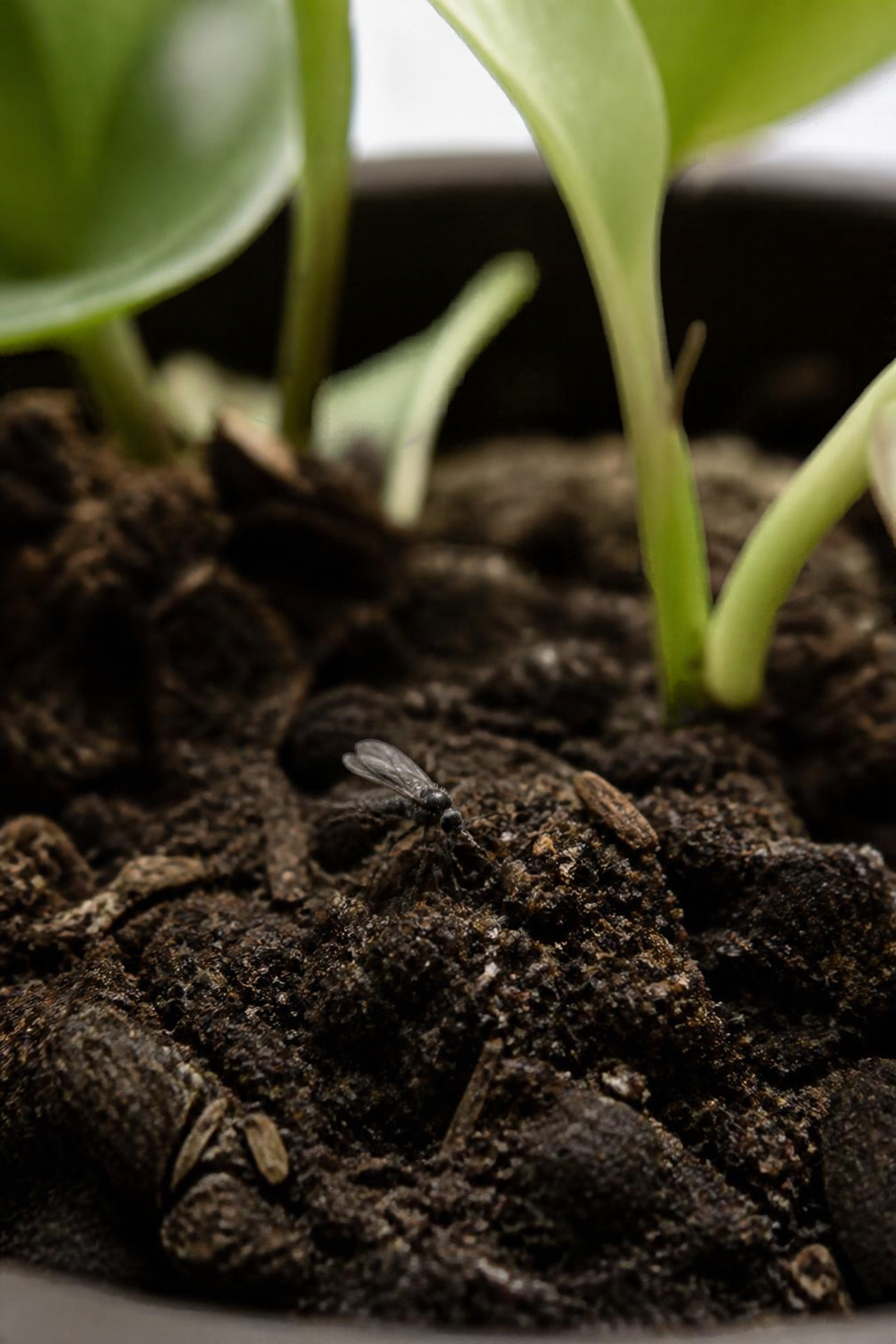
1. Are They Really Fungus Gnats?
Before you start, make sure you are fighting the right bug. Two small flies are often mixed up: fungus gnats and fruit flies.
Fungus gnats are small, dark, and slender, with long legs and long antennae. Extension sources describe them as about one eighth of an inch long. They look a bit like tiny mosquitoes. They fly weakly and clumsily, and you will usually see them near the soil, near the plant, or crawling on the pot. They also love windows and lights.
Fruit flies are rounder, often tan or light brown, and a little bigger. They hang around ripe fruit, trash cans, and drains, not plant pots.
A Quick Way to Tell
- Flies hovering over a plant pot or crawling on the soil: fungus gnats.
- Flies circling the fruit bowl or kitchen trash: fruit flies.
- Flies at the window near your plants: probably fungus gnats looking for light.
You can also try the potato test, which I cover below. It shows whether larvae are living in the soil.
2. Why Fungus Gnats Show Up
Fungus gnats are drawn to damp soil that is rich in organic matter. Adult females lay their eggs in the top layer of moist potting mix. The eggs hatch into tiny larvae that feed on fungi and rotting plant material in the soil.
The usual reasons they move into a home:
- The soil stays wet for too long because the plant gets watered too often.
- The potting mix holds a lot of water. Mixes with a lot of peat moss are a favorite.
- A new plant came home with eggs or larvae already in its soil.
- Plants spent the summer outside and carried gnats back in.
- Old, soggy leaves or other plant debris are sitting on top of the soil.
That first reason is the big one. If you tend to water a little every few days, the top of the soil never gets a chance to dry. If you are not sure whether you are overdoing it, our guide on how to tell if a houseplant is overwatered or underwatered will help you sort that out.
3. How Long Does the Life Cycle Last?
This is why the gnats seem to come back no matter what you do. Their life cycle is short, and it keeps repeating.
Extension sources say that at around 75 degrees Fahrenheit, a fungus gnat can go from egg to adult in roughly 17 days. In cooler rooms it takes longer, up to three or four weeks. Adults live only about a week, but a single female can lay a lot of eggs during that time.
What this means for you: you cannot fix the problem in a day. If you kill every adult today, eggs and larvae in the soil will still turn into new adults over the next couple of weeks. Plan on at least three to four weeks of steady work, and keep going until you have not seen a gnat for a good while.
4. Are Fungus Gnats Harmful to Your Plants?
It depends on the plant.
The adults do not hurt your plants. They are just a nuisance. The larvae are the part that can cause damage, because they chew on roots and root hairs. In most healthy houseplants, a small number of larvae does very little harm. Extension sources note that damage in homes is usually minor.
Where you should worry more:
- Seedlings and young cuttings, which have tiny, delicate roots.
- Plants that are already stressed or struggling.
- Cases where there are very large numbers of larvae.
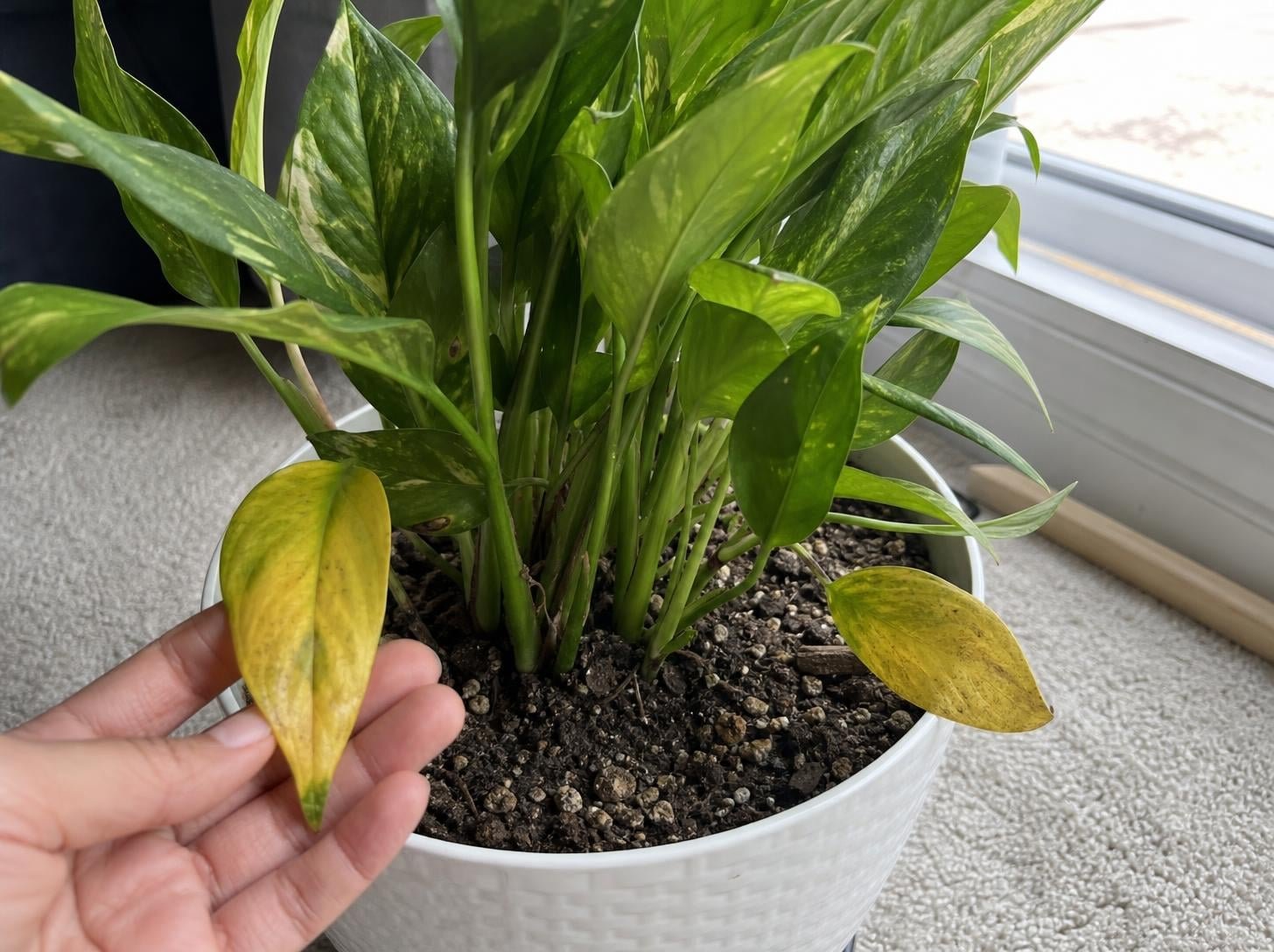
Signs that larvae may be hurting a plant include slow growth, yellowing leaves, and wilting even when the soil is moist. Those signs also match many other problems, so check the roots and the soil before you blame the gnats. Our guide on why houseplant leaves turn yellow lists the other common causes.
5. How to Get Rid of Fungus Gnats, Step by Step
You do not need to do everything on this list. Start with the first three steps, which are free or cheap. Add the others if the gnats stick around.
Step 1: Let the Soil Dry Out
This is the single most useful thing you can do. Larvae need moist soil. When the top layer dries out, eggs and young larvae do not survive well.
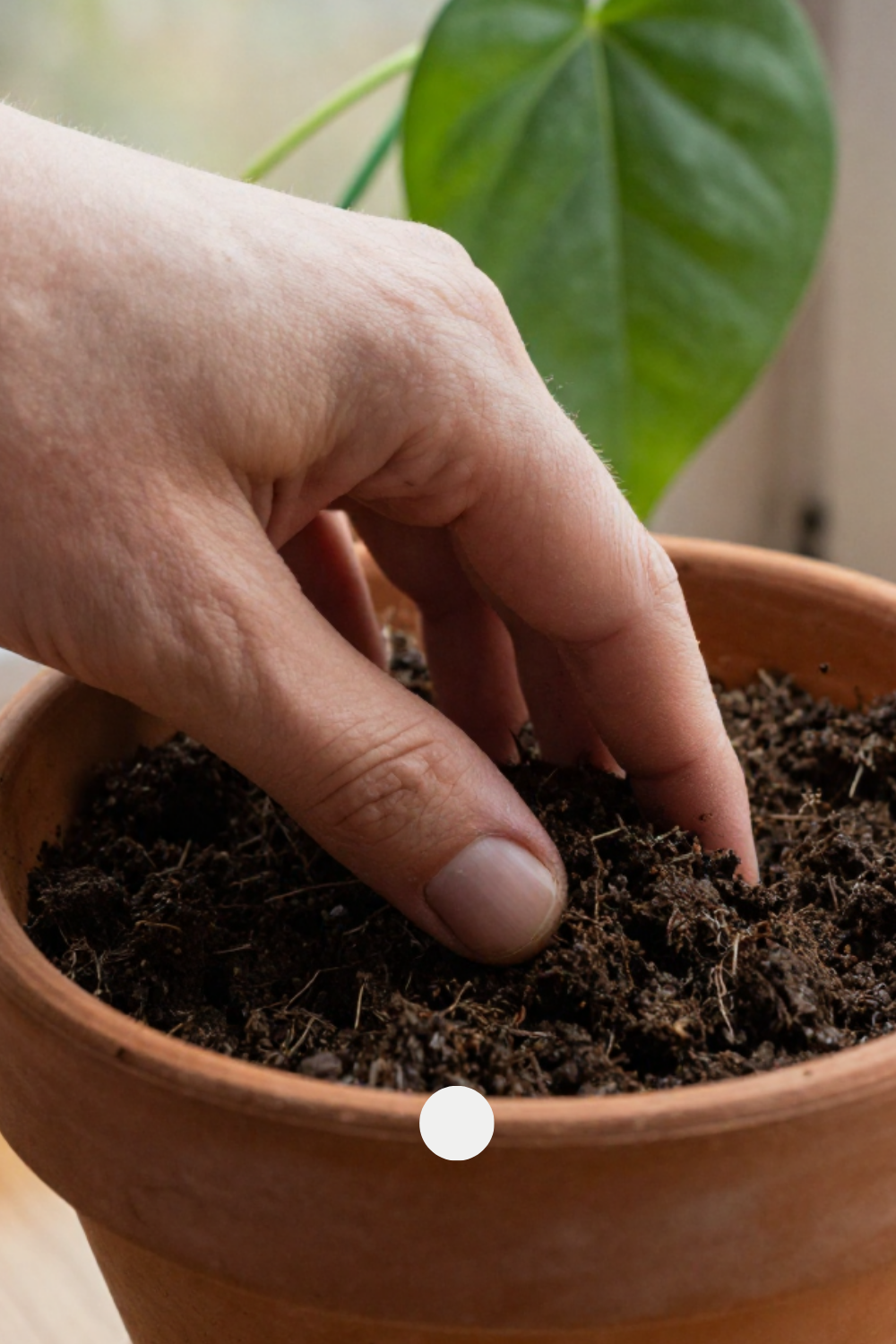
Wait until the top inch or two of soil feels dry before you water again. Push a finger into the soil to check. Some plants, such as succulents, snake plants, and ZZ plants, can handle even drier soil, so let them dry out further.
Do not let a plant wilt badly just to dry the soil. If the plant is one that likes steady moisture, find a middle ground and use the other steps along with it.
Step 2: Empty the Saucer
Water that sits in the saucer keeps the bottom of the pot wet and gives gnats a place to breed. After you water, let the pot drain, then pour out whatever collected in the saucer. Do this every time.
Step 3: Use Yellow Sticky Traps
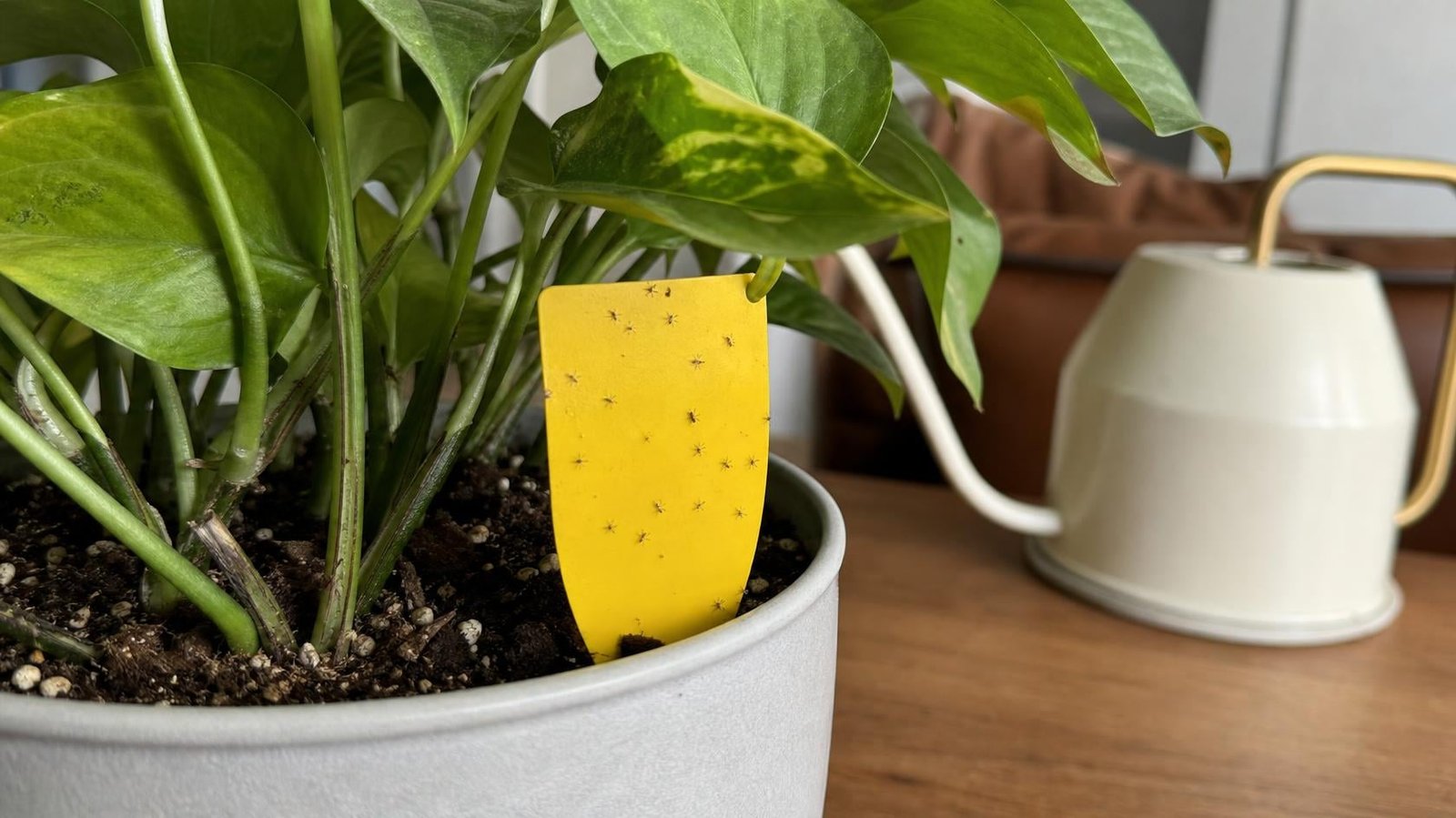
Adult gnats are attracted to the color yellow. Yellow sticky cards catch them before they lay more eggs. Push a card into the soil or hang it just above it.
Sticky traps do not solve the whole problem on their own, because they only catch adults. But they are great for two things. They cut down the number of flying gnats so you have fewer eggs being laid, and they show you whether your other steps are working. If the cards keep filling up, the gnats are still breeding.
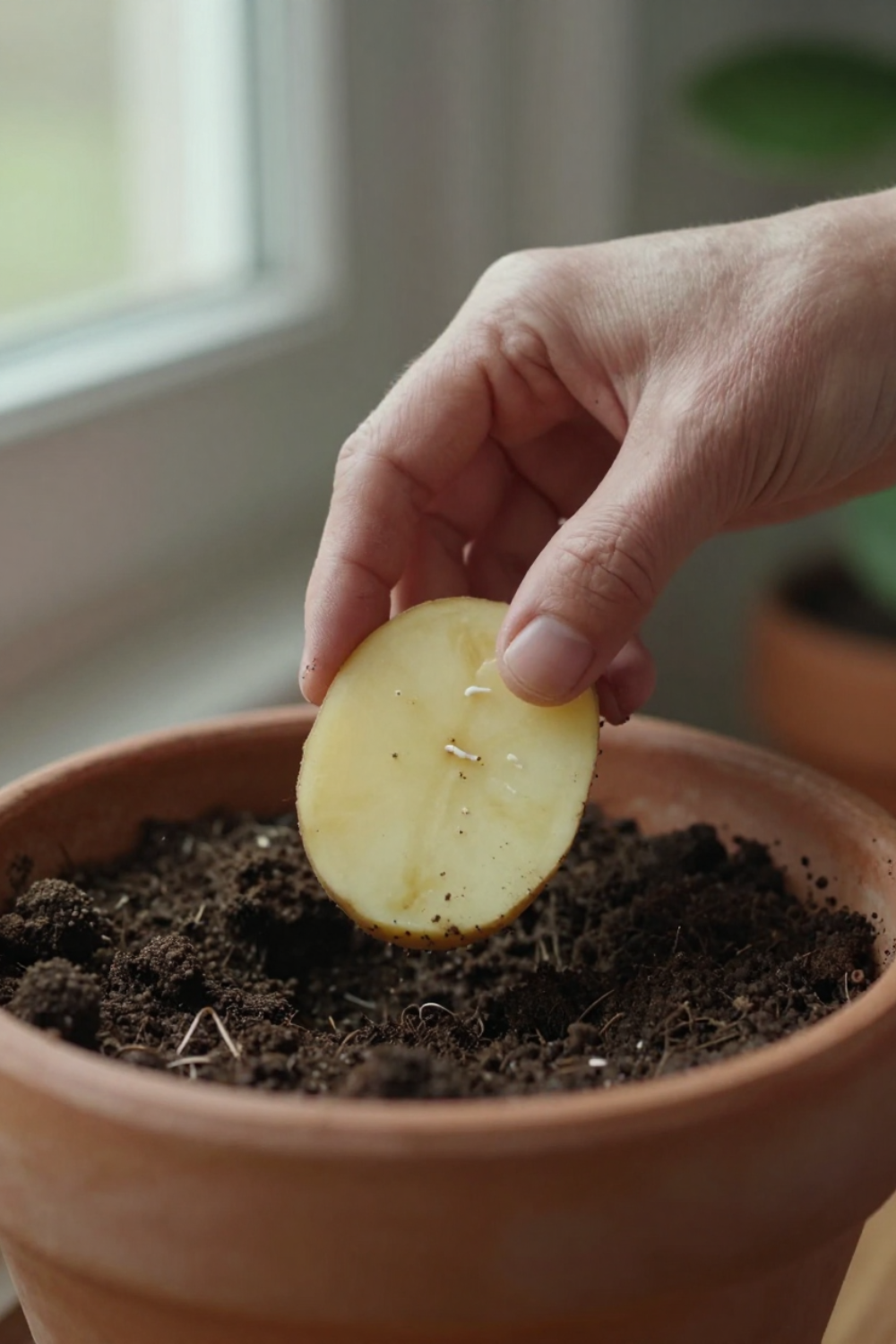
Step 4: Try the Potato Test
This simple test shows whether larvae are in the soil, and it helps you know when you are finished.
Cut a few raw potato slices, about an inch thick, and lay them flat on top of the soil. Leave them for a day or two. Then lift them and look at the underside. Larvae are small, whitish, wormlike, and have a dark head. If you see them wriggling on the potato, they are in your soil.
Repeat the test every week or so. When the slices come up clean, you are close to done.
Step 5: Water from the Bottom
Bottom watering keeps the top layer of soil drier. Set the pot in a dish of water for about 15 to 30 minutes, then take it out and let it drain. The roots soak up what they need from below and the surface stays drier, which is exactly what you want.
One note: Extension sources differ a little on whether bottom watering is the best method for every plant, since salts can build up in the soil over time. If you use it, water from the top now and then to rinse the soil, and let it drain well.
Step 6: Add a Dry Layer on Top
Covering the soil with about half an inch to an inch of coarse sand or fine gravel makes it harder for adult females to reach the damp soil to lay eggs. It also keeps the surface drier. This works best when you combine it with the other steps, not by itself.
Step 7: Treat the Soil for Larvae
If the gnats are still around after a couple of weeks, go after the larvae directly. There are two good options that are safe for most homes.
Bti. Bti is short for Bacillus thuringiensis israelensis. It is a natural bacteria that kills fungus gnat larvae and is not harmful to people or pets when used as directed. You can find it in products sold as mosquito dunks or bits, and in products made for houseplants. Follow the package directions. A common method is to soak chopped pieces of a dunk in water for about 30 minutes, then use that water to soak the soil. Extension sources suggest repeating it every five to seven days for a few weeks, since new larvae keep hatching.
Beneficial nematodes. These are tiny microscopic worms that live in the soil and attack the larvae. A type called Steinernema feltiae is often sold for fungus gnats. They come as a powder or sponge that you mix with water and pour on the soil. They work best when the soil is kept moist but not soggy, so follow the instructions on the package.
Both options work best when you also let the top of the soil dry between waterings. Do not skip that part.
Step 8: Repot Into Fresh Soil if Needed
If a plant is badly infested, the easiest fix may be to repot it. Take the plant out, shake off as much old soil as you can, and replant it in fresh, clean potting mix with good drainage. Throw the old soil away, outside and away from your other plants. Our guide on how to repot a plant in 9 steps walks through the whole process.
While you are at it, wash the pot with soap and hot water before you reuse it.
6. What About Sprays and Home Remedies?
You will find a lot of advice online. Here is what I would and would not do.
Home Remedies That Are Hit or Miss
- Cinnamon on the soil: it may help a little, but there is not much solid research behind it.
- Diluted hydrogen peroxide soil drench: some people use it, but it can also harm roots if it is too strong. Test on one plant first and keep it diluted.
- Apple cider vinegar traps: these work for fruit flies. University of Wisconsin Extension notes they do not work well for fungus gnats, so skip them.
Chemical Insecticides
Treat these as a last resort. If you do decide to use one, make sure the label says it is safe for houseplants and for use indoors, and follow the directions exactly. Spraying the flying adults is rarely worth it, since the larvae in the soil are the real source. For gentler options, see our guide to organic bug sprays and natural solutions.
7. How to Keep Fungus Gnats from Coming Back
Once the gnats are gone, a few habits will keep them away.
- Water only when the plant needs it, not on a set schedule.
- Always empty the saucer after watering.
- Use a well-draining potting mix, and make sure every pot has drainage holes.
- Pick up fallen leaves and other plant debris from the top of the soil.
- Keep new plants away from your others for two to three weeks, and check their soil before you bring them in.
- Be careful with outdoor plants you bring back inside for winter. Look them over first and treat the soil if needed.
- Keep a yellow sticky card in a few pots as an early warning system.
Many of these gnat problems start with a few small care mistakes. Our list of 11 common houseplant mistakes covers more of them, and our beginner's guide to houseplant care is a good place to build strong habits from the start.
Frequently Asked Questions
Where do fungus gnats come from?
Most often they arrive in the soil of a new plant, or they fly in through a door or window. Once inside, they stay if they find damp potting mix to lay eggs in.
Can fungus gnats hurt people or pets?
No. They do not bite and they do not carry disease to people. They are just a nuisance.
Will fungus gnats go away on their own?
Sometimes, if the soil dries out enough and stays that way. But if you keep watering the same way, they will most likely keep breeding.
How long does it take to get rid of them?
Plan on two to four weeks of steady effort. The life cycle takes about 17 days or more, so you need to keep going long enough to break it.
Can I just spray the flies?
It will not fix the problem. The larvae live in the soil, so treating the soil and letting it dry out is what works.
Are the gnats a sign I am overwatering?
Very often, yes. Wet soil is what they need to breed. Letting the top layer dry is the best fix and the best prevention.
Do fungus gnats spread from plant to plant?
Yes. Adults fly from pot to pot, so if you have one infested plant, check the others nearby and treat them too.
Final Thoughts
Fungus gnats feel like a big problem, but the fix is simple. Dry out the top of the soil, catch the adults with sticky traps, and treat the larvae in the soil. Then stay with it for a few weeks, since the life cycle needs time to break.
After that, a few small habits are all it takes to keep them away for good. Water only when the plant needs it, empty the saucer, and use a mix that drains well.
References
- University of California Statewide IPM Program: Fungus Gnats
- Colorado State University Extension: Fungus Gnats
- University of Wisconsin Horticulture Extension: Fungus Gnats
- Oregon State University Extension: Fungus Gnats
- North Carolina State Extension: Fungus Gnats, Tiny Pests in Houseplants
- Utah State University Extension: Fungus Gnats